

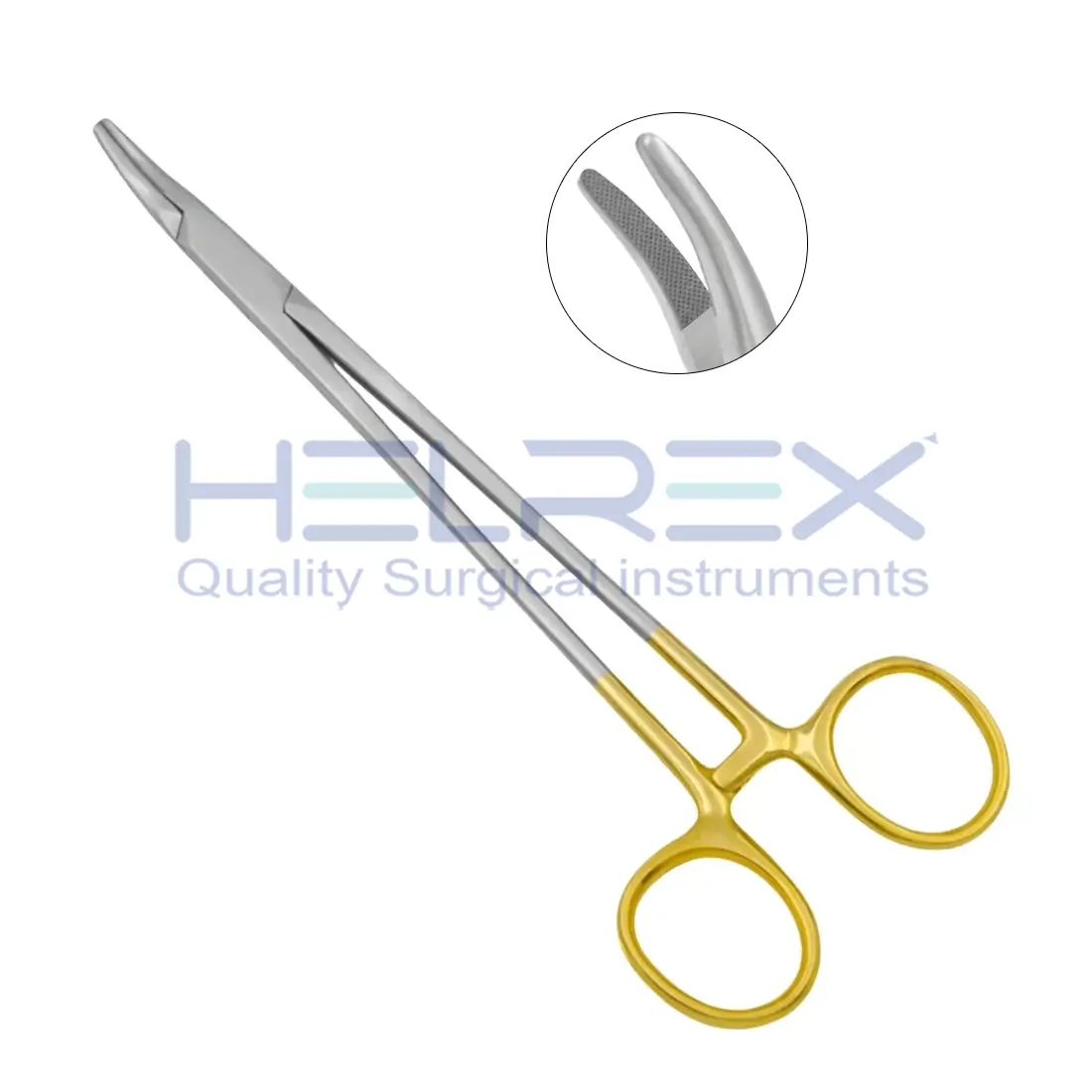
Heaney Needle Holder Tungsten Carbide Curved
Price range: $25.00 through $50.00
- Tungsten carbide jaws grip needles without slipping.
- Curved geometry clears vaginal cuff during suturing
- Fully Reusable, Autoclavable / Sterilizable.
- Premium quality materials and craftsmanship.
- Lifetime Warranty.
Introduction of Heaney Needle Holder TC Curved
Working intravaginally during a vaginal hysterectomy, sightlines matter more than force. The angled tips keep hands lateral, sparing obstruction of the surgical field and granting a better view, while a secure hold on the needle survives repeated passes through dense tissue.
Selection deserves thought. Five lengths, including the common 8″, plus a left-handed model and gold-platedut looking, and the Heaney Needle Holder answers. Its curved serrated jaw and angled curved shanks mean surgeons never fight geometry, while tungsten carbide inserts quietly deliver the grip nobody notices. Durability gets the marketing; geometry earns loyalty. Precision-milled pyramid-shaped teeth bite needles that polished surfaces would surrender. Backed by German stainless steel and an extended service-life, the cross-serrations resist wear far longer than the smooth needle handle variants, mean multiple size options rather than compromise. Match the ratcheted assembly to your actual surgical needs, and exceptional control stops being an accident.
Core Features
Most clinicians judge a closure instrument by its bite. The curved jaws here carry tungsten carbide inlays finished with a cross-serrated finish, and that non-slip crosshatched surface is what stops rotation mid-pass. Optimizing grip matters more than force when passing sutures through tissue.
Finger ring handles paired with straight and long shafts give the operator reach into the deep surgical field — a detail I appreciated first during vaginal procedures. The Quick Release ratchet locks without hesitation, letting you handle and rotate needles with easy mobility and optimal control.
Handcrafted from German steel, each 8in total length frame is durable enough for autoclave abuse across years. Precision at the tip does not fade; surgical advantages come from serrations of the jaws that keep strong grasps on a wide range of needles without crushing them.
During abdominal hysterectomy and dilation and curettage, light to medium weight suturing demands a firm grip on needles rather than brute clamping. That security carries into routine and complex surgical procedures, where accuracy and unparalleled control decide whether challenging suturing tasks finish clean.
Specification and uses
Most buyers judge a needle holder by its box lock, but the jaw pattern decides everything. The serrated cross-hatching machined into tungsten carbide jaws creates a dependable non-slip surface, and that texture alone determines whether your grip on the needle survives a full pass.
Surgical-grade stainless steel forms the shanks, usually 410 or 420 series, with carbide inserts brazed rather than pressed — a quiet contributor to durability. Sizing spans various lengths, roughly 14 through 22 centimetres, letting the surgical instrument match cavity depth rather than hand preference.
The curvature is where the Heaney earns its name. Angled jaws clear the vaginal cuff during gynecological procedures, where straight patterns force wrist rotation. In delicate surgeries deep within the pelvis, that geometry makes holding and guiding needles possible without lifting the shank into your own sightline. Beyond obstetrics, adoption has drifted outward. Surgeons borrow it for plastic surgery procedures and selected microsurgical procedures, though the smallest sutures — 8-0 and finer — belong in narrower-tipped patterns. For cardiovascular approximation, 5-0 and 6-0 polypropylene sit securely, provided the serrations remain unworn.
| Weight | 0.14 kg |
|---|---|
| Please Select Length | 21.5cm, 31cm(+$15.00), 35cm(+$20.00), 40cm(+$25) |
Be the first to review “Heaney Needle Holder Tungsten Carbide Curved”
- Helrex surgical instruments is a highly specialized process that requires attention to detail to ensure safety, sterility, and compliance with medical regulations. Each instrument should be carefully inspected for damage, wear, and proper functioning. Any defective items are discarded or repaired. Our instruments must be packed in poly bags packaging sterile packaging or according to Customers demand (Leather Case, Blister card, Display box etc.) Delivery time:- 6 working days via DHL/ FEDEX/ UPS/ TNT, 12working days via EMS. We must be shipped ASAP after payment is received in 5 working days or according to agreement.
Related products
Plastic Surgery Needle Holders
Plastic Surgery Needle Holders
Plastic Surgery Needle Holders
Plastic Surgery Needle Holders
Plastic Surgery Needle Holders
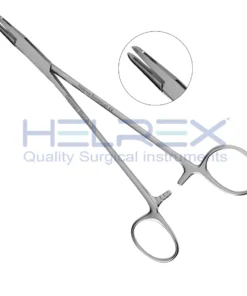
Plastic Surgery Needle Holders
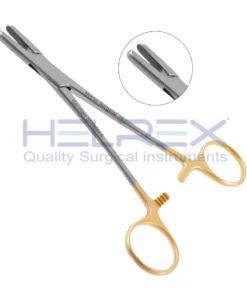
Plastic Surgery Needle Holders
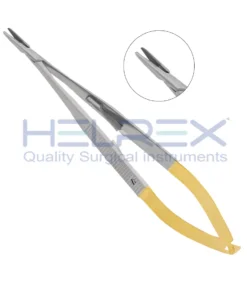
Plastic Surgery Needle Holders

Reviews
There are no reviews yet.