

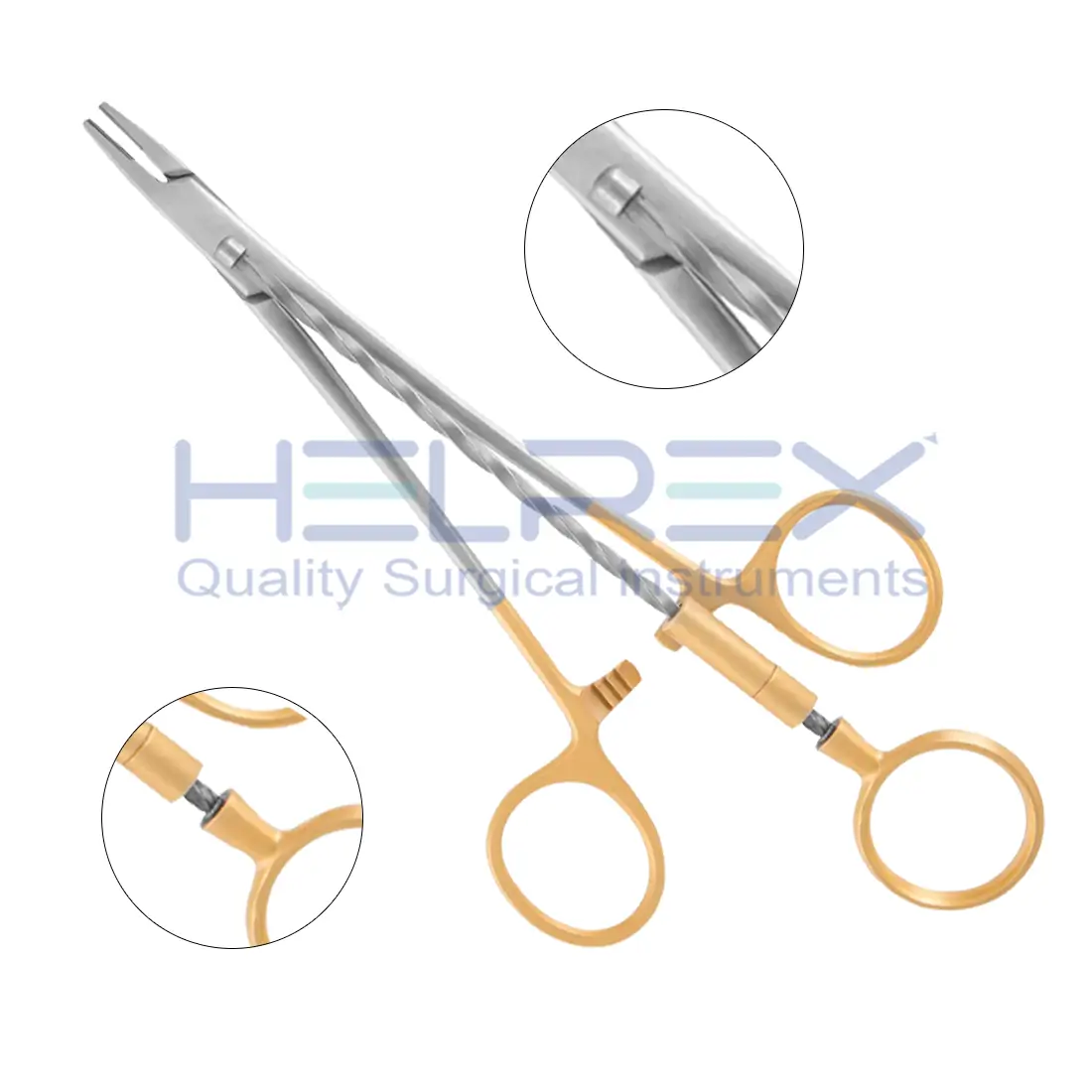
Corwin Automatic Wire Twister Needle Holder
Original price was: $87.00.$55.00Current price is: $55.00.
- Serrated tungsten carbide jaws prevent wire slippage.
- Grips cerclage wires through repeated rotations.
- Fully Reusable, Autoclavable / Sterilizable.
- Premium quality materials and craftsmanship.
- Lifetime Warranty.
Introduction of Corwin Wire Twister Needle Holder
Most surgical specialists meet the Crown Wire Twister Needle Holder late — usually mid-procedure, when a cerclage refuses to hold. That moment teaches more than any catalogue does this is a specialized instrument built for mechanical control, not a Needle Holder wearing a borrowed name.
Ask about failure first. Wire-induced wear kills cheap instruments; tungsten-carbide inlays and high-quality stainless steel answer it, since the alloy resists corrosion while preserving structural integrity. Durability here isn’t marketing — it’s the difference between secure gripping at minute forty and a slipped wire at minute forty-one.
In practice, handling dynamics decide adoption. The long thin shaft, finger rings, and ergonomic grip let surgeons work inside confined spaces without wrist strain, while gently serrated working jaws convert hand pressure into consistently smooth twisting motions rather than crushed, weakened metal.
Scope surprises people. Beyond orthopedic treatments that support bones and treat fractures, the same ideal tool appears in plastic surgery and general surgical procedures, handling looping, tightening, and wire manipulation wherever precise, repeatable efficient twisting matters more than raw force.
Core Features of Corwin Wire Twister Needle Holder
Start at the business end. The serrated TC jaws aren’t decorative texturing — that pattern is what lets you grip the wire without the tip walking. Add the ultra-grip tungsten carbide inlay and you get high-performance jaws that resist degradation across hundreds of autoclave cycles.
Handle geometry gets overlooked. The gold ring handle isn’t only aesthetic appeal — colour-coding permits quick identification on a crowded Mayo stand, while the straight shaft and flat tip preserve orientation during procedures when your visual field narrows to a few centimetres.
Loading matters most when jaws twist. Reinforced jaws deliver the torsional strength needed to bend wires without splaying, and a firm powerful grip keeps surgical cerclage wires seated through repeated rotations. That mechanical honesty under torque is where real reliability shows itself.
Supplied non-sterile at 15 cm, this orthopedic instrument also earns its place in plastic surgeries where implants demand a firm secure grip. Availability in different sizes supports hard-to-reach tissue layers, and the design meets International Standards of Medical Hygiene throughout manufacturing.
Specifications And Uses
Most surgeons judge an Automatic Wire Twister Needle Holder by its bite. The precise tungsten carbide jaws are cross-serrated to prevent slippage, and after years at the table I can tell you that jaw texture matters far more than handle length ever did.
Sizes run 15–18 cm, with tungsten inserts rated for 0.5 mm K-wires. Cutting notches sit near the box lock. Orthopedic trauma teams reach for it during rigid fracture stabilization, where a secure grip on wires decides whether the cerclage loops hold under load.
Versatile use is oversold, though. In minimally invasive procedures the instrument’s bulk fights you, and it has no business in superficial tissue layers. Its surgical advantages narrow to one thing: control during manipulation of stiff wire, which few other holders manage cleanly.
| Specification: | Details: |
|---|---|
| Material | Premium Quality German Stainless Steel with Superior Craftsmanship. |
| Finish | Highly Dull-Polished for Aesthetic and Corrosion Resistance |
| Tests Performed | Boil Test, Performance Test, Shape Test |
| Packaging | Each Product Packed Individually |
| Sterilization | Fully Autoclavable and Reusable |
| Cleaning Method | Ultrasonic Cleaned |
| Steel Grade | High Grade Stainless Steel |
| Quality Control | All Products QC Passed |
| Weight | 0.14 kg |
|---|---|
| Tip Type | Flat Tip, Round Tip |
| Please Select Length | 15.5cm, 15cm, 16cm |
Be the first to review “Corwin Automatic Wire Twister Needle Holder”
- Helrex surgical instruments is a highly specialized process that requires attention to detail to ensure safety, sterility, and compliance with medical regulations. Each instrument should be carefully inspected for damage, wear, and proper functioning. Any defective items are discarded or repaired. Our instruments must be packed in poly bags packaging sterile packaging or according to Customers demand (Leather Case, Blister card, Display box etc.) Delivery time:- 6 working days via DHL/ FEDEX/ UPS/ TNT, 12working days via EMS. We must be shipped ASAP after payment is received in 5 working days or according to agreement.
Related products
Plastic Surgery Needle Holders
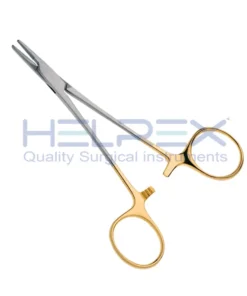
Plastic Surgery Needle Holders
Neivert Needle Holder Tungsten Carbide 13cm One Angled Ring Serrated Jaws
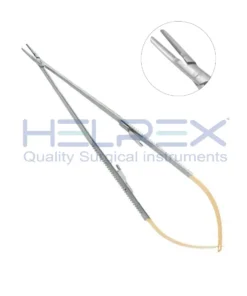
Plastic Surgery Needle Holders
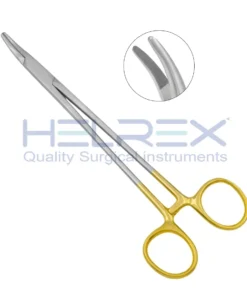
Plastic Surgery Needle Holders
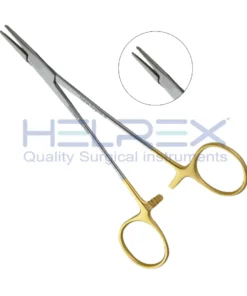
Plastic Surgery Needle Holders
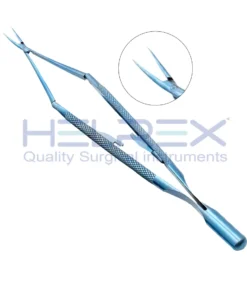
Plastic Surgery Needle Holders
Double-Action Micro Needle Holder with Diamond Surface jaws grip
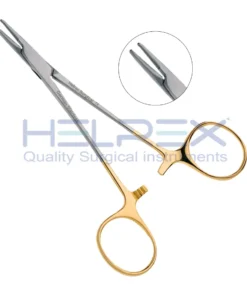
Plastic Surgery Needle Holders
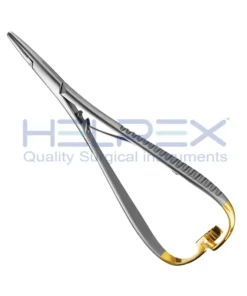
Plastic Surgery Needle Holders

Reviews
There are no reviews yet.