

Explore our premium Plastic Surgery Morselizers
Stiff cartilage rarely cooperates once it leaves the body. Its cartilage memory keeps pulling tissue toward the original curve, undoing careful work. As a manufacturer, we build every cartilage morselizer around one problem. Graft material must turn pliable without losing what keeps it alive.
Surgeons performing rhinoplasty or septoplasty once relied on heavy pliers and guesswork. Our morselizers replace that with controlled crushing, where hardened jaws close evenly across the graft. The surgeon decides how far to soften cartilage, and the instrument delivers the same pressure every time, case after case.
Contrary to popular belief, crushing is not about flattening tissue into submission. A well-made surgical instrument keeps viable cells intact, so the reshaped graft settles with a natural feel. We treat morselizers as precision tools that support skill, and design each one for predictable, repeatable results.
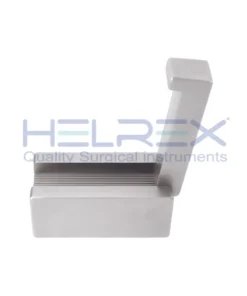
Morselizers
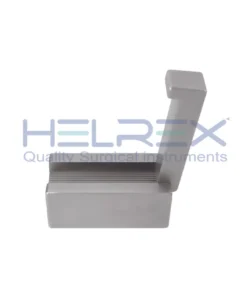
Morselizers
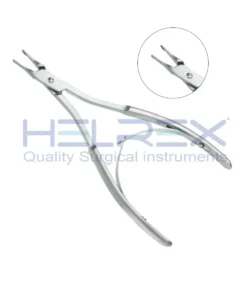
Morselizers
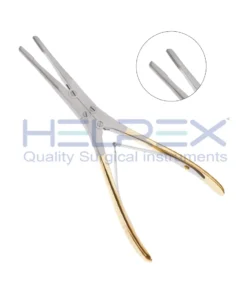
Morselizers
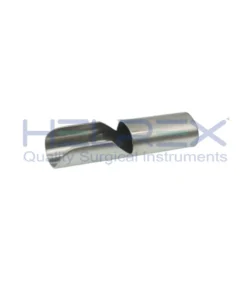
Morselizers
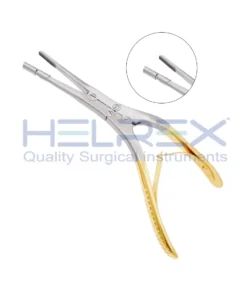
Morselizers
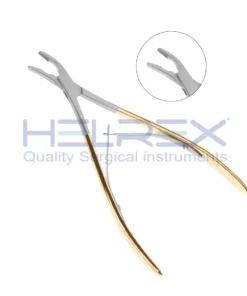
Morselizers
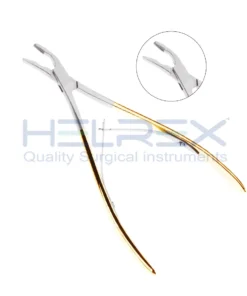
Morselizers
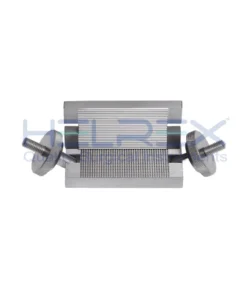
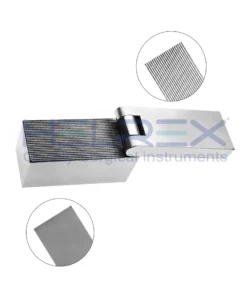
Features of Morselizers
The Cottle morselizer and Rubin morselizer use serrated jaws or cross-hatched jaws to crush tissue firmly. A Gorney morselizer offers textured jaws for finer grip. The Sheen/Constantian morselizer pairs flat jaws with smooth jaws, working like precise forceps. Each design changes the degree of crushing delivered.
Cartilage harvested from the septum during deviated septum straightening is often surprisingly ideal. When unavailable, the ear concha supplies curved tissue, while rib provides extra bulk. A scalpel helps trim rough edges on a cartilage cutting block or grooved board, keeping cutting cartilage precise and clean.
Graded crushing starts small. Light scoring or gentle flattening yields lightly crushed cartilage that can bend without bending back, offering a less rigid feel. Stronger crushing produces heavily crushed cartilage, noticeably weakened and flattened. Near-complete crushing creates a paste-like graft, similar to diced cartilage, though scoring alone sometimes suffices.
Correcting a saddle nose deformity means filling depressions along the nasal dorsum. Camouflage grafts hide small irregularities under thin skin, where visibility of any uneven contour matters. At the nasal tip, soft tip grafts and other softened grafts add volume, smoothing irregularities and shallow depressions.
Overcrushed tissue is easily resorbed, and results shrink as resorption over time progresses. Crushed fragments are seldom reused. Among alternatives, grafts wrapped in fascia hold form, since fascia protects cells. Some cases proceed without crushing entirely. Tissue shaped by careful judgment lets surgeons shape the graft precisely.