

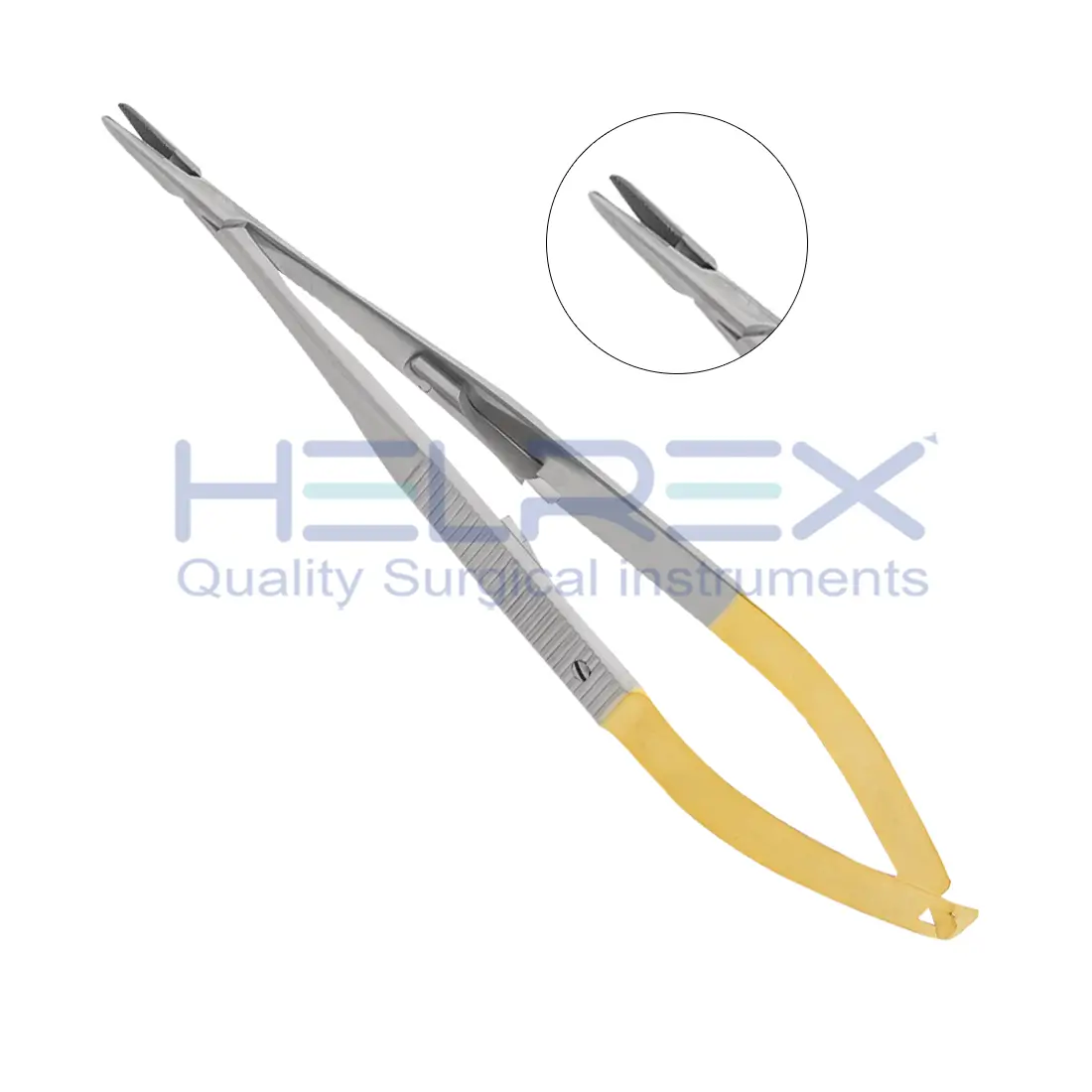
Castroviejo Needle Holder – Tungsten Carbide
Original price was: $65.00.$55.00Current price is: $55.00.
- Used for precision in delicate Tungsten Carbide suture tasks.
- Fully Reusable, Autoclavable / Sterilizable.
- Premium quality materials and craftsmanship.
- Lifetime Warranty.
Castroviejo Needle Holder – Tungsten Carbide
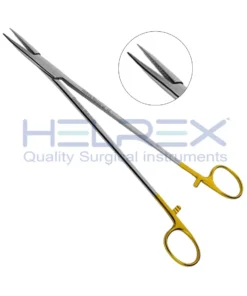
Most residents I’ve trained judge a Castro needle holder by its jaws first. I’d argue the wrist tells you more. Fourteen centimetres of slender design sits differently in a gloved hand and that fit decides whether hour three feels steady or shaky. Straight jaws suit microsurgical procedures where your approach runs parallel to the tissue plane. The serrated jaws here bite 8-0 and 9-0 thread without flattening it, so the smallest sutures pass through with minimal trauma and no maddening spin mid-throw.
Body material matters less than catalogues suggest, though surgical-grade stainless steel with carbide inserts ages well. What separates tungsten carbide needle holders in clinical settings is finishing — handcrafted inserts, evenly seated, delivering great control long after budget instruments loosen. That seating makes one durable.
Core Features
Anyone who has had to suture wounds under magnification knows the fineness of tips decides everything. These smooth tungsten carbide jaws carry pyramid-shaped teeth that grip 5-0 sutures without flattening them, and the caliber of finish resists the slippage cheaper needle holders develop after a month. The straight needle driver ships with no lock, a choice surgeons either love or question. Without a locking mechanism the round pattern handle rotates smoothly between fingers. And giving unparalleled control during placement in distal areas where a spring release would jar the needle. Constructed to the highest standards, the robust material endures the Castroviejo Needle Holder sterilization process dozens of times without pitting. Instruments reused repeatedly across various surgeries hold their dependable non-slip surface, which is why long-term durability matters more than the initial price tag.
Specification and Uses
Most surgeons judge a holder by its jaws first, but shaft diameter decides fatigue over a three-hour case. This 5.5″ straight instrument runs 14cm, tungsten carbide inserts brazed into serrated jaws, and a precisely palm-held handle that rolls between thumb and index finger. Tungsten carbide is not decoration. The inserts grip 5-0 through 10-0 suture without the needle spinning, and when they eventually wear, replacement restores the bite. That single detail is why extended service-life separates these from stamped stainless needle holders you replace every second year.
Ophthalmic work made this pattern famous, though I have watched it earn its keep in vascular anastomosis and cleft repair. Multiple uses follow from the straight shank: corneal suturing, microvascular grafting, delicate skin closure where a curved tip would obstruct the surgeon’s own line of sight. Spring tension is the specification nobody prints. Too stiff and the tremor transfers; too soft and the needle drifts mid-pass.
Our unique design features centre on that calibrated leaf spring, giving flexibility in closure pressure rather than a single locked-in force across every suture gauge. Non-locking here is deliberate. Ratchets click, and that click travels through tissue at 40x magnification. Across clinical settings from theatre to ambulatory suite, microsurgical needle holders without a catch let you release and reposition in one continuous motion, which shortens ischaemia time measurably. Sterilisation is where premium quality proves itself. Surgical-grade stainless, passivated, satin-finished to kill glare under operating lamps, autoclavable at 134°C without pitting at the box joint. Check the insert seam after fifty cycles; a poorly brazed carbide face lifts there long before the jaws lose grip.
| Weight | 0.14 kg |
|---|---|
| Please Select Length | 14cm, 18cm |
| Select | Ceramic coating, Stainless steel, Titanium |
| Shape | Curved, Straight |
| Please select | With Lock, Without Lock |
Be the first to review “Castroviejo Needle Holder – Tungsten Carbide”
- Helrex surgical instruments is a highly specialized process that requires attention to detail to ensure safety, sterility, and compliance with medical regulations. Each instrument should be carefully inspected for damage, wear, and proper functioning. Any defective items are discarded or repaired. Our instruments must be packed in poly bags packaging sterile packaging or according to Customers demand (Leather Case, Blister card, Display box etc.) Delivery time:- 6 working days via DHL/ FEDEX/ UPS/ TNT, 12working days via EMS. We must be shipped ASAP after payment is received in 5 working days or according to agreement.
Related products
Plastic Surgery Needle Holders
Olsen Webster Needle Holder Tungsten Carbide 4 1/2″ (11.5cm)
Plastic Surgery Needle Holders
Plastic Surgery Needle Holders
Plastic Surgery Needle Holders
Neivert Needle Holder Tungsten Carbide 13cm One Angled Ring Serrated Jaws
Plastic Surgery Needle Holders

Plastic Surgery Needle Holders
Plastic Surgery Needle Holders
Plastic Surgery Needle Holders

Reviews
There are no reviews yet.