


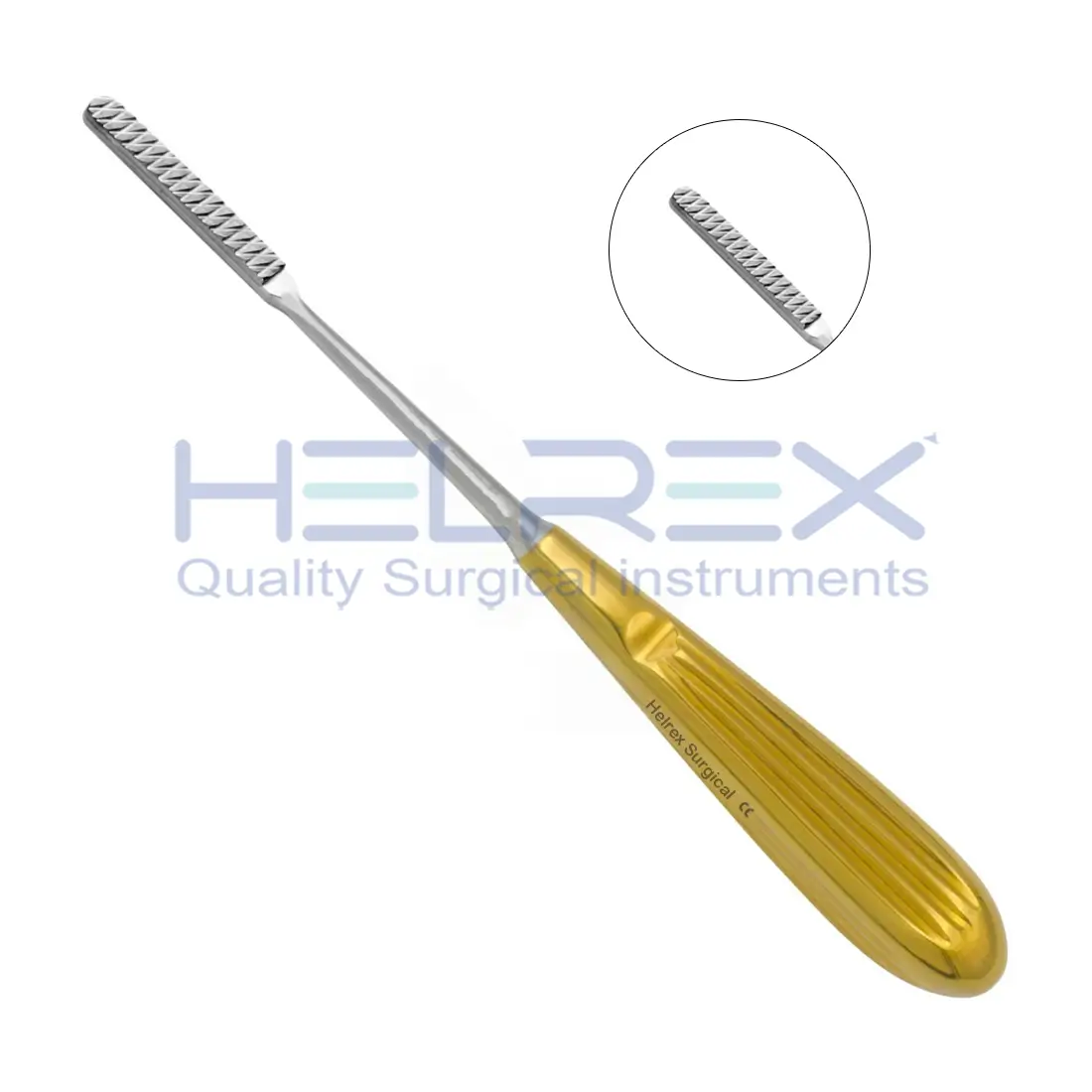
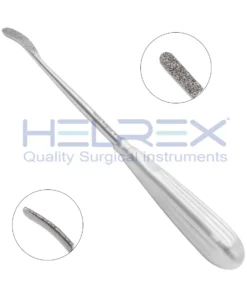
Parkes Nasal Rasp Fine Tungsten Carbide
Original price was: $85.00.$62.00Current price is: $62.00.
- Fine tungsten carbide tips for precise contouring.
- Serrated heads deliver smooth, controlled rasping action.
- Fully Reusable, Autoclavable / Sterilizable.
- Premium quality materials and craftsmanship.
- Lifetime Warranty.
Introduction of Parkes Nasal Rasp Fine Tungsten Carbide
The Parkes Nasal Rasp in Fine Tungsten Carbide serves the surgeon who reshapes the nasal pyramid with intent. Built around fine-grit tungsten carbide tips, this single-ended instrument meets delicate bone structures where precise, controlled shaping matters more than raw force.
Rhinoplasty rarely forgives clumsy hands, and this is where material choice quietly decides outcomes. Tungsten carbide holds its edge across nasal reconstructive procedures, letting a practitioner refine nasal bones during bone contouring without the drift that dulls softer tools during surgery.
Anyone deep in this field knows subtlety wins. This Parkes Nasal Rasp treats cartilage and hard tissue with equal restraint, a distinction rooted in Premium Quality engineering. It reads less like a blunt file and more like an extension of trained, deliberate hands.
Unique Features
The Parkes Push Pull Nasal Rasp, also called the Parkes Rasp, featuring a cylindrical taper with serrated tips. Its serrated heads range from Rasp #1 through Rasps #2 and #3 and #3 to #8, offering inlays and improved grip. The ergonomic handle and ergonomic design ensure a secure grip, ideal weight, balance, and feel for optimal comfort. Crafted from traditional stainless steel or German Stainless Steel, it delivers dependable performance.
Surgeons reach for this rasp during delicate refinement of the nasal dorsum, shaving small controlled amounts of bone. Its fine grit removes rough or jagged edges without over-resection, letting controlled sculpting happen gradually across the bony hump rather than aggressively.
The straight down-cutting design and longitudinal serrations produce a smoother rasping action than coarse files. Working tips with closely packed teeth deliver superior cutting performance, refining a fine texture onto exposed bone while maintaining precise control throughout each careful pass.
Depending on surgical preference, some choose the fine reverse cut for smooth refined finish work during prolonged procedures. This efficient instrument suits exceedingly fine grit and extremely fine grit stages, where gentle touch-ups matter far more than bulk removal near closure.
| Weight | 0.14 kg |
|---|
Be the first to review “Parkes Nasal Rasp Fine Tungsten Carbide”
- Helrex surgical instruments is a highly specialized process that requires attention to detail to ensure safety, sterility, and compliance with medical regulations. Each instrument should be carefully inspected for damage, wear, and proper functioning. Any defective items are discarded or repaired. Our instruments must be packed in poly bags packaging sterile packaging or according to Customers demand (Leather Case, Blister card, Display box etc.) Delivery time:- 6 working days via DHL/ FEDEX/ UPS/ TNT, 12working days via EMS. We must be shipped ASAP after payment is received in 5 working days or according to agreement.
Related products
Nasal Rasps


Nasal Rasps
Nasal Rasps

Reviews
There are no reviews yet.