

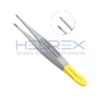
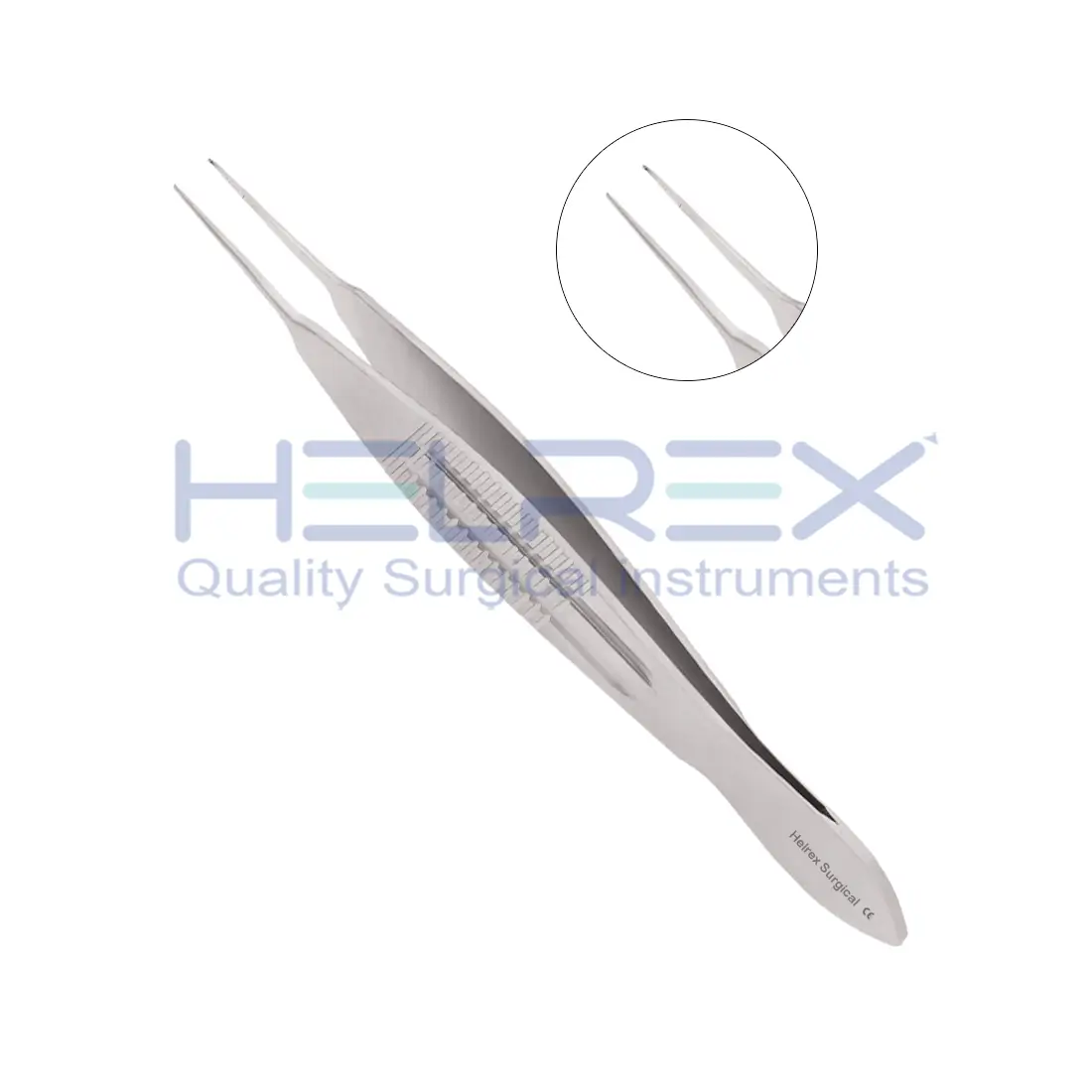
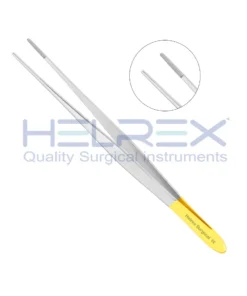
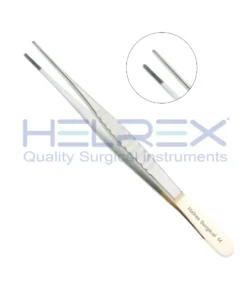
Castroviejo straight suture forceps 1×2 teeth With Platform 1.5mm Tip – 10.5 cm
Original price was: $45.00.$18.00Current price is: $18.00.
- 10.5 cm length suits delicate ocular procedures.
- 1×2 teeth grip tissue without crushing it.
- Fully Reusable, Autoclavable / Sterilizable.
- Premium quality materials and craftsmanship.
Introduction of Castroviejo straight suture forceps 1×2 teeth With Platform 1.5mm Tip – 10.5 cm
Few surgeons remember when they first reached for a Castroviejo, yet most remember the case that made it indispensable. Those were usually delicate surgical procedures where ordinary forceps bruised more than they held. This pattern answered that problem with restraint, not force.
Two versions share the same 10.5 cm body but behave differently at the jaw. A 1.5 mm tip concentrates grip for precise ocular and plastic work. The 3 mm tip distributes contact, helping when tissue is thicker or friable. Choosing between them is really a question of controlled tissue handling.
Look closely and the 1×2 teeth explain the design’s reputation. One tooth seats between two opposing teeth, so tissue stays put without crushing. Just behind them, a tying platform grips suture cleanly. These specialized surgical forceps therefore handle two jobs that trays often assign to separate instruments.
Specifications of Castroviejo straight suture forceps
Two tip widths define this pattern, yet both share one compact length of 10.5 cm. The 1.5 mm version suits delicate ocular tissue, while the 3 mm option spreads load across thicker layers. Choosing between these fine tip configurations depends on tissue density, not surgeon preference alone.
The 1×2 toothed design places a single tooth opposite two, creating an interlocking bite that resists slippage. Behind the teeth sits a flat platform, useful for tying sutures without switching instruments. Carefully finished tips matter here, since any burr could tear tissue or fray suture material during tying.
Material choice often gets overlooked until an instrument corrodes mid-procedure. These forceps use premium surgical-grade stainless steel, which holds tip alignment after repeated sterilization cycles. That durable construction keeps jaw tension consistent over years. The teeth still meet precisely long after cheaper alloys drift.
Surgeons working in confined operative areas need forceps that manipulate and hold tissue without crushing it. Here, secure tissue grasping comes from the teeth, while controlled pressure comes from the handles. Stable instrument handling improves access near the globe. Such excellent handling explains their steady use across professional surgical environments.
| Weight | 0.14 kg |
|---|
Be the first to review “Castroviejo straight suture forceps 1×2 teeth With Platform 1.5mm Tip – 10.5 cm”
- Helrex surgical instruments is a highly specialized process that requires attention to detail to ensure safety, sterility, and compliance with medical regulations. Each instrument should be carefully inspected for damage, wear, and proper functioning. Any defective items are discarded or repaired. Our instruments must be packed in poly bags packaging sterile packaging or according to Customers demand (Leather Case, Blister card, Display box etc.) Delivery time:- 6 working days via DHL/ FEDEX/ UPS/ TNT, 12working days via EMS. We must be shipped ASAP after payment is received in 5 working days or according to agreement.
Related products
Thumb Forceps

Thumb Forceps
Thumb Forceps
Thumb Forceps

Reviews
There are no reviews yet.