

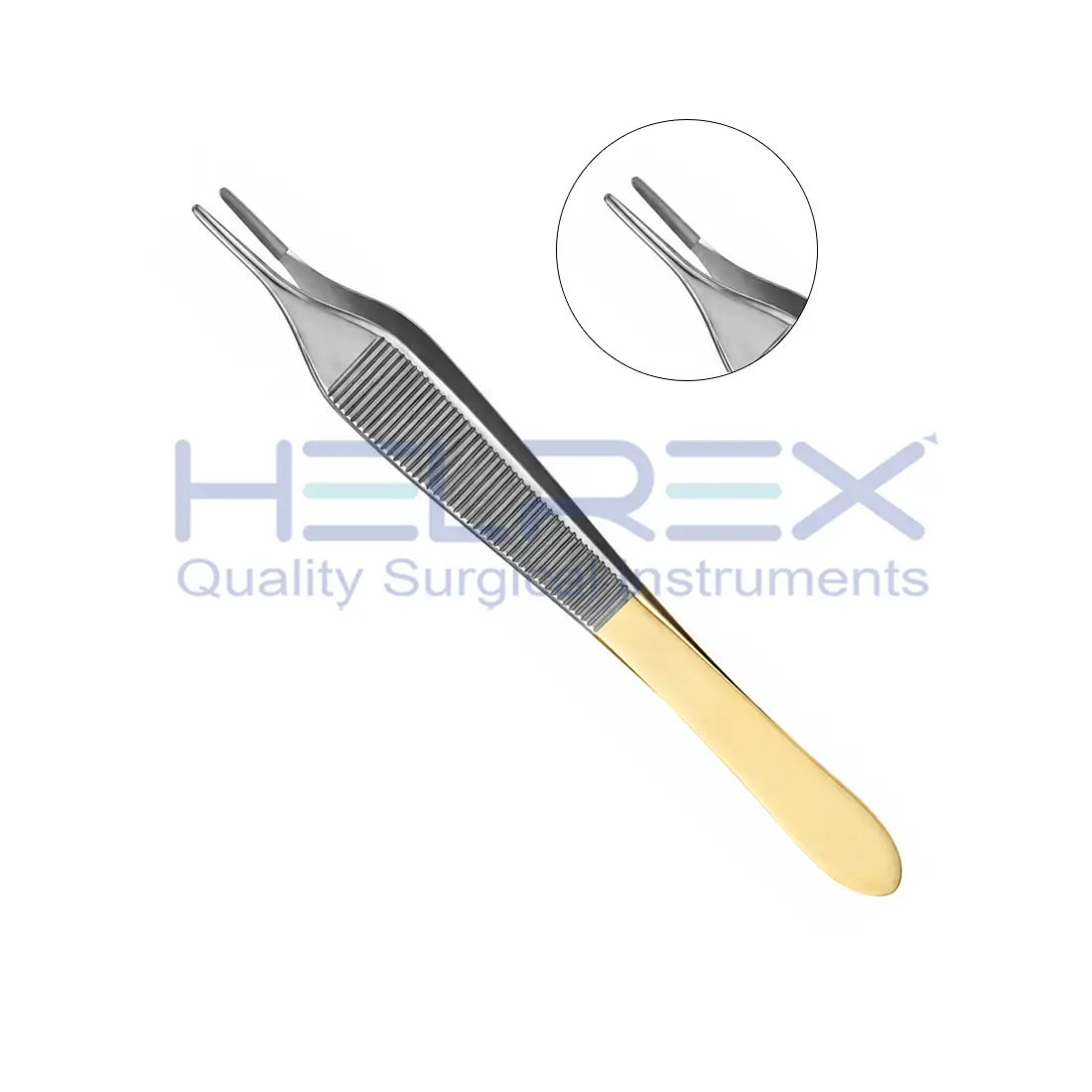
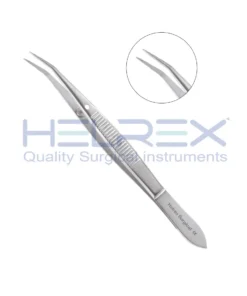
Adson Dressing Cross Serrated TC Forceps
Original price was: $45.00.$24.00Current price is: $24.00.
- Tungsten carbide jaws resist wear and corrosion.
- Cross-serrated tips grip tissue without crushing.
- Fully Reusable, Autoclavable / Sterilizable.
- Premium quality materials and craftsmanship.
Introduction of Adson Dressing Cross Serrated TC Forceps
Most surgeons meet Adson patterns late, after fumbling with cheaper tweezers. The 12.0 cm and 15.0 cm variants exist because hand size and procedures differ, not marketing. Cross-serrated jaws hold gauze without crushing, a detail noticed only during long wound closure work.
Tungsten Carbide changes the economics. TC inserts resist wear, so instruments survive repeated autoclave cycles instead of being discarded. The satin finish matters equally — an anti-glare surface stops reflected light from blinding you mid-dissection, something catalogues rarely bother explaining to buyers.
Dermatology clinics, microsurgery suites, and the operating theatre each demand different tip alignment tolerances. Cross-toothed jaws grip bandages and sutures firmly; 1×2 teeth versions bite tissue. Choosing wrongly costs precision, and atraumatic grasping becomes impossible once serration pattern wear begins.
Uses of Adson 12.0 cm, Cross Serrated
Surgeons reach for these during skin closure and suturing, where cross-serrated tips hold soft tissue without crushing it. The 12 cm version suits shallow fields; 15 cm allows deep gripping inside narrow cavities during longer surgical procedures. Both belong in any plastic surgery tray.
Outside the operating room, wound clinics rely on them as bandage tweezers. Nurses use them for handling bandages, peeling gauze, and dressing changes where minimal trauma matters. The secure grip prevents slipping when delicate materials adhere to healing wounds during slow removal.
Dental and ophthalmic teams borrow them too. Fine tips give improved visibility around small sites, while tissue grasping during graft placement demands maximum control. Technicians also apply them to suture handling and knot positioning across varied clinical settings daily. Precision instruments earn their keep here.
Built from stainless steel of medical grade, these surgical instruments arrive as autoclavable, reusable instruments ready for repeated sterilization and kept sterile between cases. The ergonomically shaped handle delivers enhanced comfort and additional control, while a non-slip grip steadies the thumb through long shifts of tissue handling. Jaw serrations support secure grasping, and polished tweezer tips stay easy to clean before being reused. As tissue forceps, dressing forceps, or grasping forceps, they sit among the hand instruments most available in stock, featuring corrosion resistance and improved durability expected of instrument grade steel. Two lengths cover most specific needs, so options exist whenever surgical handling demands slimmer tips — forceps chosen this way rarely disappoint.
| Weight | 0.14 kg |
|---|---|
| Please Select Length | 12cm, 15cm |
Be the first to review “Adson Dressing Cross Serrated TC Forceps”
- Helrex surgical instruments is a highly specialized process that requires attention to detail to ensure safety, sterility, and compliance with medical regulations. Each instrument should be carefully inspected for damage, wear, and proper functioning. Any defective items are discarded or repaired. Our instruments must be packed in poly bags packaging sterile packaging or according to Customers demand (Leather Case, Blister card, Display box etc.) Delivery time:- 6 working days via DHL/ FEDEX/ UPS/ TNT, 12working days via EMS. We must be shipped ASAP after payment is received in 5 working days or according to agreement.
Related products
Thumb Forceps
Thumb Forceps
Thumb Forceps

Thumb Forceps
Thumb Forceps
Thumb Forceps

Reviews
There are no reviews yet.