

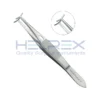
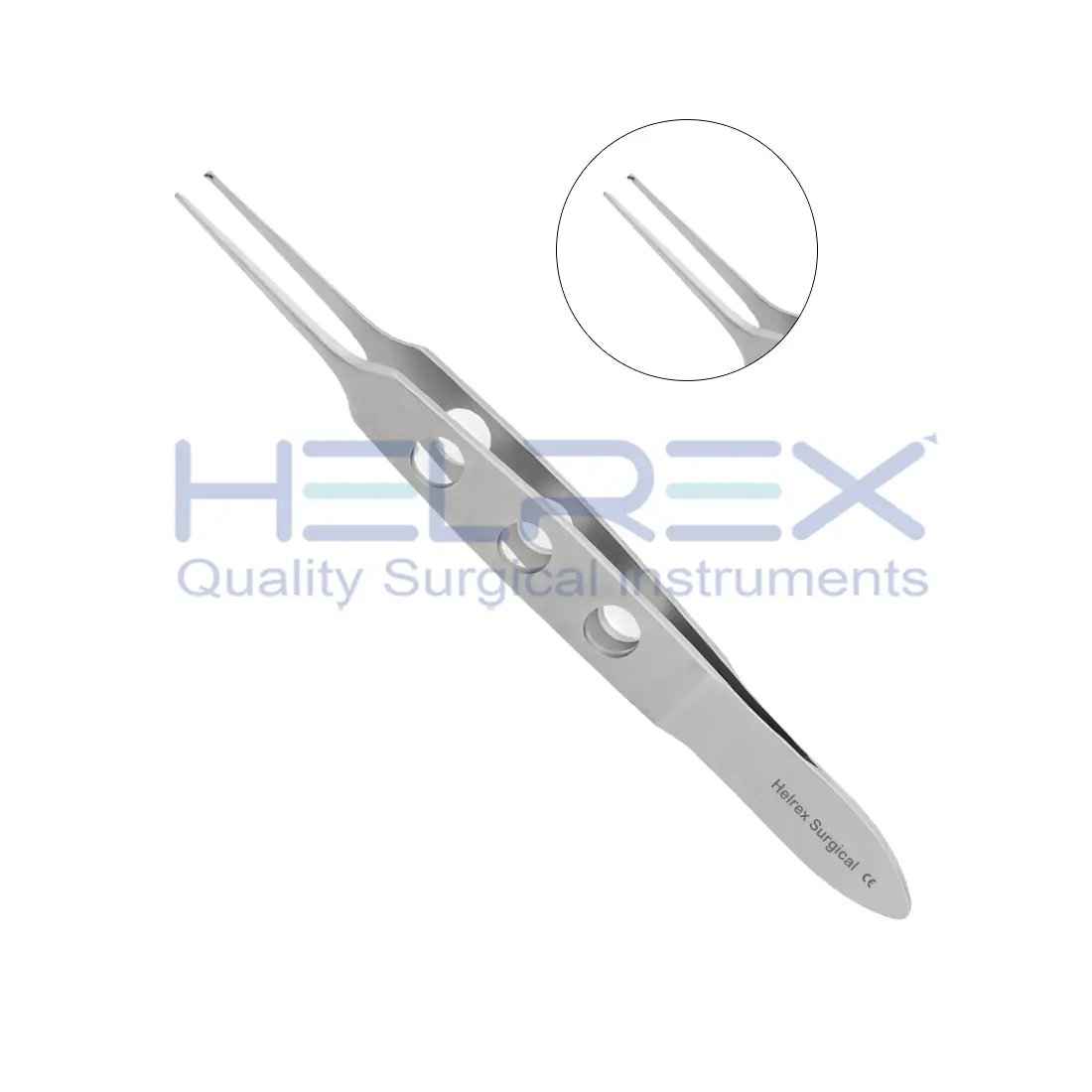
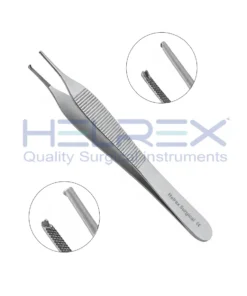
Bishop-Harmon Smooth Forceps 8.5cm 1×2 teeth
Original price was: $32.00.$18.00Current price is: $18.00.
- Precise 1×2 teeth grip without tearing tissue.
- Compact 8.5 cm length for orbital spaces.
- Fully Reusable, Autoclavable / Sterilizable.
- Premium quality materials and craftsmanship.
Introduction of Bishop-Harmon Smooth Forceps 8.5cm 1×2 teeth
Most injury in fine surgery starts with the grasp, not the blade. That observation explains why Bishop-Harmon forceps earned a lasting place on ophthalmic trays. Surgeons valued an instrument that could hold delicate tissues without crushing them. That expectation still shapes how the pattern is judged.
Many assume a microsurgical grasping tool belongs only in eye work. In practice, plastic and dermatological surgeries rely on it just as often. Wherever skin edges or thin membranes need controlled handling, a highly precise tip outperforms bulkier options found in general sets.
The pattern is primarily used when the margin for error is measured in fractions of a millimeter. It was designed as a specialized option, intended to minimize slippage and tearing. Experienced hands notice the difference quickly, especially during long cases where fatigue tests every movement.
Uses of Bishop-Harmon Smooth Forceps 8.5cm
Most surgeons underestimate how often this forcep decides the outcome before the first incision closes. In ophthalmic theaters, it rarely performs dramatic work. Instead, it holds conjunctiva steady during suture passes, helping the operator place each bite precisely. Delicate handling here prevents swelling that patients notice days later.
Cataract surgery drove its early adoption, when iris manipulation demanded something gentler than general clamps. Today, corneal transplant teams still reach for it while stabilizing graft edges. Its secure grip lets residents rotate the eye without slippage. Microsurgical trabeculectomy and strabismus repairs also rely on this same finely controlled hold.
Experienced hands know restraint matters more than force. Beyond the eye, oculoplastic and pediatric surgical procedures benefit from its light touch on thin eyelid skin. Handling tissue gently avoids unnecessary crushing. That discipline reduces trauma, shortens healing, and keeps scarring minimal for patients.
Few instruments balance reach and control like this one. Its compact 8.5 cm length suits tight orbital spaces. The 1×2 tooth configuration places two teeth opposite one, gripping tissue without tearing. Smooth handles and stainless construction keep it dependable through repeated sterilization cycles.
| Weight | 0.14 kg |
|---|
Be the first to review “Bishop-Harmon Smooth Forceps 8.5cm 1×2 teeth”
- Helrex surgical instruments is a highly specialized process that requires attention to detail to ensure safety, sterility, and compliance with medical regulations. Each instrument should be carefully inspected for damage, wear, and proper functioning. Any defective items are discarded or repaired. Our instruments must be packed in poly bags packaging sterile packaging or according to Customers demand (Leather Case, Blister card, Display box etc.) Delivery time:- 6 working days via DHL/ FEDEX/ UPS/ TNT, 12working days via EMS. We must be shipped ASAP after payment is received in 5 working days or according to agreement.
Related products
Thumb Forceps
Thumb Forceps
Thumb Forceps
Thumb Forceps
Thumb Forceps

Reviews
There are no reviews yet.