

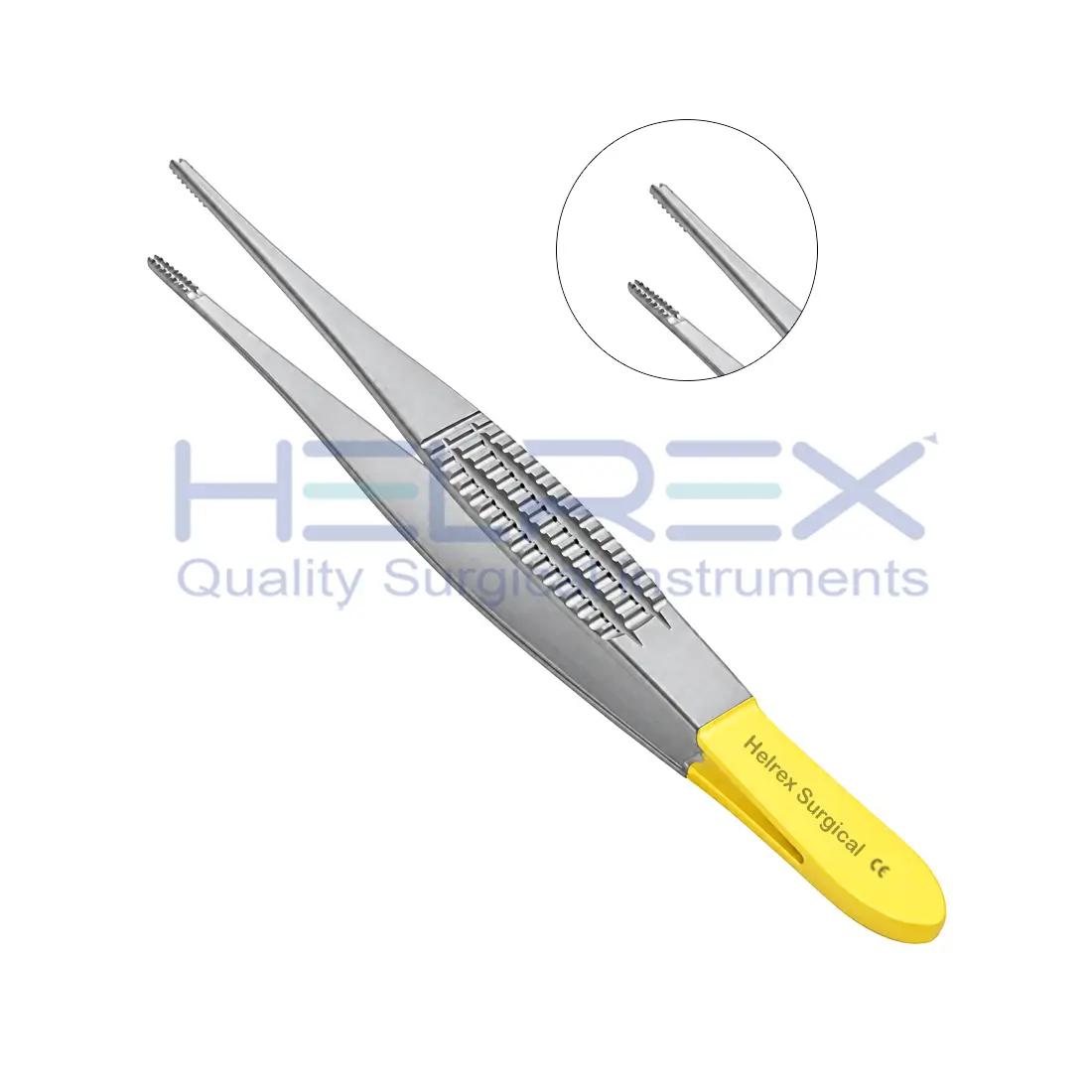
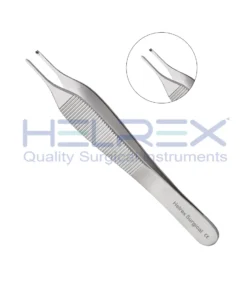
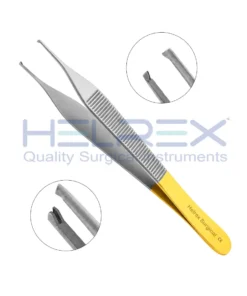
Castroviejo-Brown Tissue Forceps 11.5 cm
Original price was: $45.00.$22.00Current price is: $22.00.
- Fine Brown teeth grasp tissue without tearing.
- Micro-diamond dust-coated jaws prevent accidental needle slippage.
- Fully Reusable, Autoclavable / Sterilizable.
- Premium quality materials and craftsmanship.
Introduction of Castroviejo Brown Tissue Forceps
Most surgeons judge an instrument by what it refuses to do: tear, crush, or slip. The Castroviejo-Brown Tissue Forceps earns trust through exactly that restraint. These fine tissue forceps prove their worth where fields are small and margins thin. Near the eye, every movement carries consequence.
Ramon Castroviejo shaped modern ophthalmology with tools built for corneal work, and this pattern inherits that lineage. Its Brown-type teeth hold soft tissues without puncturing them. That balance ensures a minimum risk of trauma during delicate tissue manipulation. Eyelid specialists performing blepharoplasty lean on it heavily.
Many assume bigger teeth mean a stronger hold, yet the opposite often proves true. Finer engagement spreads pressure and protects fragile layers. Being handcrafted, each pair stands apart from mass-produced surgical instruments. Placing sutures, passing needles, and stabilizing flaps all feel more predictable with this controlled, precise grasp.
Uses of Castroviejo – Brown Tissue Forceps
Most surgeons reach for these forceps expecting brute holding power, yet their real value lies in restraint. The fine brown teeth pinch delicate tissues without crushing them. In corneal suturing, conjunctival repair, and plastic closures, that gentleness decides whether edges heal cleanly or scar unpredictably.
Ophthalmic history explains the design. Early eye surgeons needed a secure grip on slippery sclera, so the interlocking teeth design evolved. Today, the micro-diamond dust-coated jaw adds friction where suture needles pass. This prevents accidental slippage during surgical procedures involving thin membranes, vessel walls, and fragile nerve sheaths.
Microsurgeons use them throughout a prolonged procedure for grasping delicate tissue, such as flaps, wound margins, and grafts. Neurosurgery, hand surgery, and pediatric repairs benefit equally. Because the instrument is reusable, teams sterilize and return it to trays after each case. Precision stays consistent over years of use.
The compact 4 1⁄2” (11.5cm) model suits orbital work, while the 15 cm version reaches deeper fields. Both carry delicate brown teeth built for grasping delicate tissue without tearing it. Handling matters just as much, since an ergonomic design keeps a comfortable grip and limits hand fatigue. The gold-plated spring grip returns the tips smoothly, easing finger strain. A satin finish helps reduce glare under microscope lights and improve visibility of fine sutures. Built from high-quality surgical stainless steel, the forceps offer durability and corrosion resistance through repeated sterilization. Smooth surfaces are easy to clean, making this a long-lasting instrument for busy theatres.
| Weight | 0.14 kg |
|---|
Be the first to review “Castroviejo-Brown Tissue Forceps 11.5 cm”
- Helrex surgical instruments is a highly specialized process that requires attention to detail to ensure safety, sterility, and compliance with medical regulations. Each instrument should be carefully inspected for damage, wear, and proper functioning. Any defective items are discarded or repaired. Our instruments must be packed in poly bags packaging sterile packaging or according to Customers demand (Leather Case, Blister card, Display box etc.) Delivery time:- 6 working days via DHL/ FEDEX/ UPS/ TNT, 12working days via EMS. We must be shipped ASAP after payment is received in 5 working days or according to agreement.
Related products
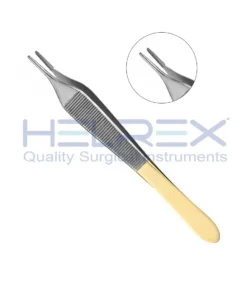
Thumb Forceps
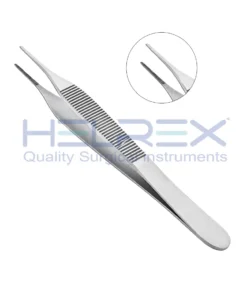
Thumb Forceps
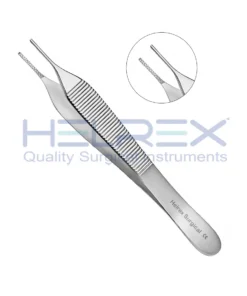
Thumb Forceps

Thumb Forceps
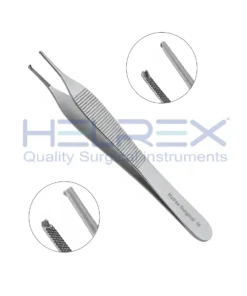
Thumb Forceps

Reviews
There are no reviews yet.