



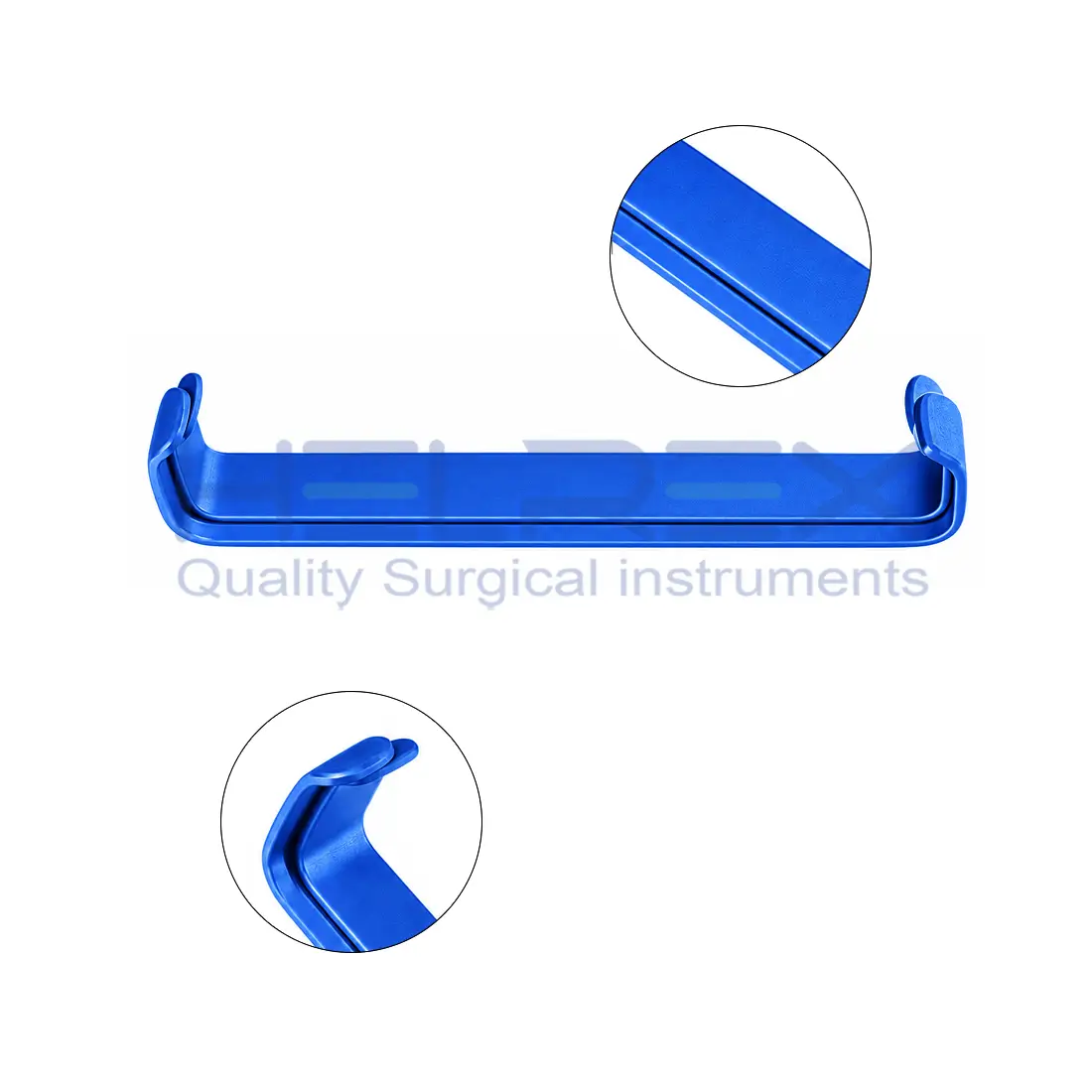
Titanium Farabeuf Retractor Double-Ended
Original price was: $65.00.$38.00Current price is: $38.00.
- Double-ended L-shaped design with two blade sizes.
- Lightweight titanium reduces hand fatigue during surgery.
- Fully Reusable, Autoclavable / Sterilizable.
- Premium quality materials and craftsmanship.
- Lifetime Warranty.
Introduction of Titanium Farabeuf Retractor Double Ended
Few surgical instruments outlast their inventor’s century, yet the Farabeuf Retractor still earns daily trust from surgeons. Its origin traces to Louis Hubert Farabeuf, a French surgeon who valued exposure over force. We manufacture this Double-Ended version in Titanium, keeping his intent intact while refining balance, finish, and handling.
Why carry two tools when one instrument offers two blades? Our L-shaped design places a distinct working end on each side, so the retractor adapts instantly. That configuration lets teams switch between retracting shallow margins and deeper tissues accurately. It serves a broad range of surgical specialties and procedures.
Titanium matters beyond weight. It resists corrosion through repeated sterilization, meeting strict worldwide medical hygiene standards that hospitals now demand. The lighter mass reduces hand fatigue, letting assistants statically hold exposure longer. Our benefits include precision grinding and consistent passivation, keeping this most recognized pattern dependable across thousands of cycles.
Uses of Titanium Farabeuf Retractor Double-Ended
The real value of this titanium instrument shows late in a case, when fatigue sets in and exposure starts slipping. Surgeons rarely praise a retractor for holding steady. Yet that quiet strong grip across deep surgical incisions decides whether assistants work or reposition.
In laparotomy, we see it spreading multiple layers of tissues without crushing fascia. Each end suits a different depth, so one tool manages intra-abdominal organs and superficial wound edges alike. Assistants retract bowel loops gently, then flip the instrument when large tissue areas demand broader exposure.
Many assume bulky steel is required for heavy and vast tissue sections. Our titanium build challenges that, gripping large and heavy pieces of tissue while staying light in tired hands. Orthopedic, plastic, and general teams use it for widening deep surgical cuts across multiple types of tissues during reconstruction.
Sizing starts with the working ends, not handle length, because blade lengths dictate where retraction force lands. The baby 4-3/4″ (12.1 cm) version and the 6″ (15.0 cm) model share one L-shape logic. Each blade differs, and those different blade lengths let the two pieces cover shallow and deeper planes. Compact dimensions like 23 x 16mm, 26 x 10mm, and 26 x 16mm suit a smaller set. Broader openings call for a larger set, with 27 x 16mm, 30 x 10mm, and 30 x 16mm blades.
Our deepest option pairs 30x13mm with 34 x 13mm, offering multiple lengths inside one set of two pieces. A straight shaft into an L-shaped outline keeps hands clear while expanding the field. The tip ends in a falling lip, sometimes called a terminal falling lip or terminal descending lip. That curving forward edge helps it grasp tissue and angle forward around intraabdominal organs. With variable blade lengths on hand, teams stop improvising and simply choose the right depth.
| Weight | 0.14 kg |
|---|
Be the first to review “Titanium Farabeuf Retractor Double-Ended”
- Helrex surgical instruments is a highly specialized process that requires attention to detail to ensure safety, sterility, and compliance with medical regulations. Each instrument should be carefully inspected for damage, wear, and proper functioning. Any defective items are discarded or repaired. Our instruments must be packed in poly bags packaging sterile packaging or according to Customers demand (Leather Case, Blister card, Display box etc.) Delivery time:- 6 working days via DHL/ FEDEX/ UPS/ TNT, 12working days via EMS. We must be shipped ASAP after payment is received in 5 working days or according to agreement.
Related products

Plastic Surgery Retractors

Plastic Surgery Retractors

Plastic Surgery Retractors

Plastic Surgery Retractors

Plastic Surgery Retractors

Plastic Surgery Retractors

Plastic Surgery Retractors

Plastic Surgery Retractors

Reviews
There are no reviews yet.