


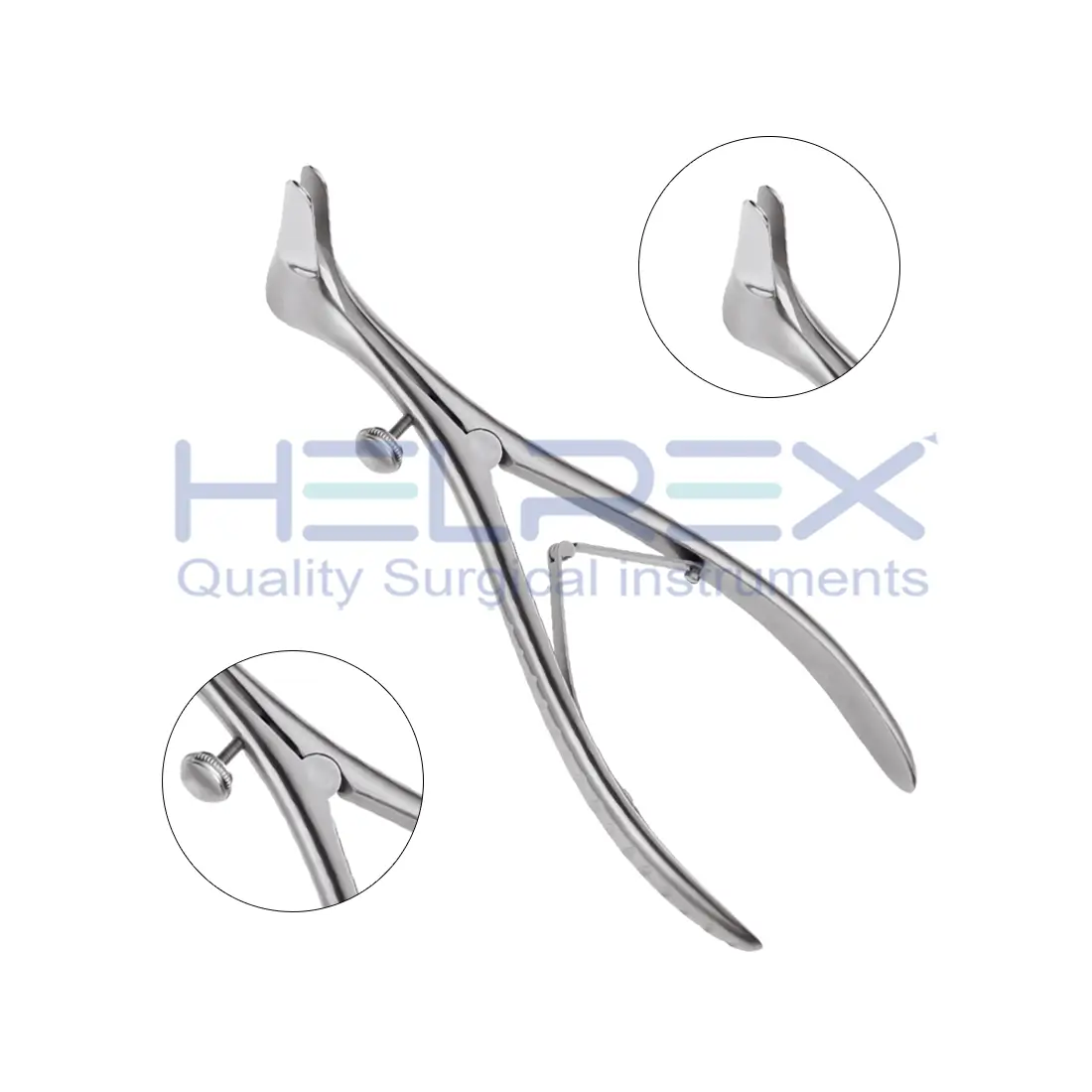
Tebbetts Nasal Speculum 6″ (15cm)
Original price was: $75.00.$46.00Current price is: $46.00.
- Precision spring mechanism supports controlled nasal retraction.
- Self-locking function maintains steady surgical exposure.
- Fully Reusable, Autoclavable / Sterilizable.
- Premium quality materials and craftsmanship.
- Lifetime Warranty.
Introduction of Tebbetts Nasal Speculum 6″ (15cm)
Ask a rhinoplasty surgeon what fails first inside a cramped field, and the answer is seldom the technique. This specialized instrument solved a quieter problem instead. The Tebbetts™ Nasal Speculum, 6″ (15cm), holds tissue apart steadily, granting improved visibility where anatomy stays stubbornly narrow.
Its precision spring mechanism and self-locking function do the tedious work, so fingers stop compensating. Surgeons performing septoplasties, closed rhinoplasty, or ENT surgery notice the difference around the fortieth minute, when grip fatigue usually begins rewriting how carefully anyone handles delicate cartilage.
Serrated grip handles and an ergonomically designed handle keep control predictable during open rhinoplasty, while blades spread the nasal cavity gently enough to minimize trauma. Built reusable and finished as a premium surgical instrument, it favours optimal exposure over brute force.
Specifications of Tebbetts Speculum 15cm
Most practitioners judge this speculum by its blade sizes first. Two builds exist. Thin blades span 38.0 mm, suiting narrow anatomy and tighter corridors. Wide blades reach 45.0 mm when broader access matters. That single choice shapes entry angle, tissue handling, and working rhythm throughout.
The integrated knurled screw rarely gets discussed, yet it defines behaviour. Thumb pressure translates into gradual retraction, holding position without drift. That locked setting gives precise control while both hands stay free. Steady separation of the alae helps maximize visualization deep inside the passage.
Length matters more than surgeons admit. At 6 inches, roughly 15 cm, the longer handle keeps fingers clear of the operative field. An ergonomically shaped grip reduces fatigue across lengthy cases, supporting surgeon comfort. Smooth stainless construction stays easy to clean between sterilization cycles.
Specifically engineered for intranasal procedures, this plastic surgery instrument is manufactured with utmost care, delivering precision at the nasal tip. A core component within standard rhinoplasty instrument configurations, it enables precise retraction, exposure of nasal cavity, and greater comfort during reconstructive surgery, plastic surgery, and any surgical procedure across busy clinical settings.
| Weight | 0.14 kg |
|---|
Be the first to review “Tebbetts Nasal Speculum 6″ (15cm)”
- Helrex surgical instruments is a highly specialized process that requires attention to detail to ensure safety, sterility, and compliance with medical regulations. Each instrument should be carefully inspected for damage, wear, and proper functioning. Any defective items are discarded or repaired. Our instruments must be packed in poly bags packaging sterile packaging or according to Customers demand (Leather Case, Blister card, Display box etc.) Delivery time:- 6 working days via DHL/ FEDEX/ UPS/ TNT, 12working days via EMS. We must be shipped ASAP after payment is received in 5 working days or according to agreement.
Related products

Nasal Speculum
Nasal Speculum
Nasal Speculum


Reviews
There are no reviews yet.