


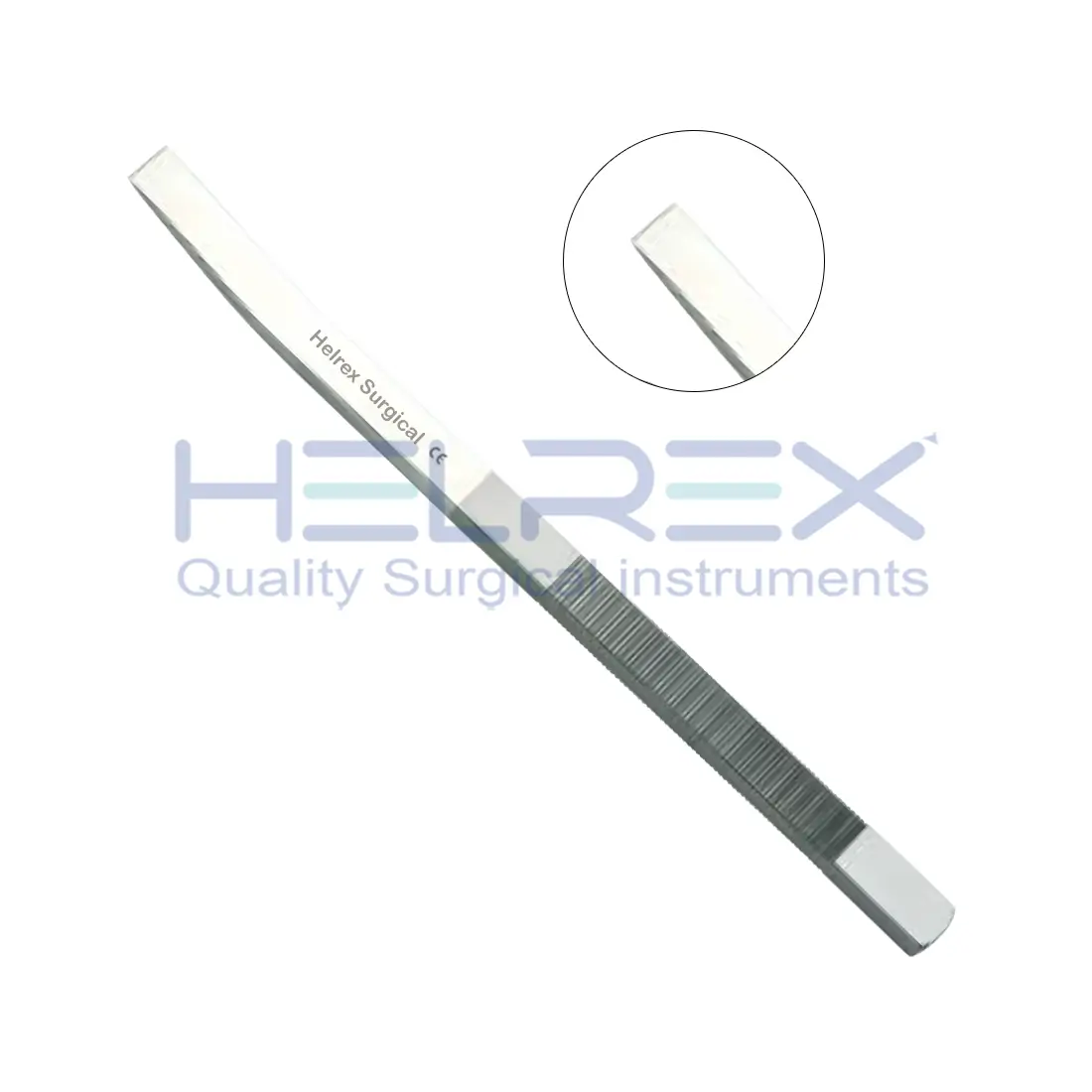
Sheen Angled, Acute Radix Chisel Osteotome 18cm
Original price was: $68.00.$48.00Current price is: $48.00.
- Acute 10º angled blade for oblique bone contact.
- Dedicated radix chisel for precise nasal-root reshaping.
- Fully Reusable, Autoclavable / Sterilizable.
- Premium quality materials and craftsmanship.
Introduction of Sheen Angled, Acute Radix Chisel Osteotome
Within nasal surgery, the Sheen Acute Angle Radix Chisel occupies a narrow niche. Practitioners recognize this Radix Chisel osteotome as a dedicated bone chisel. Its purpose stays fixed on the radix region. As a precision instrument, the chisel rewards deliberate handling.
The defining trait sits in the angle of the chisel. This acute angle, roughly 10º, tilts the angled working face. Such a 10º angled blade meets bone obliquely, not straight on. Geometry, not brute force, guides how a radix edge behaves.
Historically, radix reshaping demanded steady, measured technique over raw speed. Here the osteotome earns its role across rhinoplasty procedures worldwide. Serving surgical noses, it aids careful bone shaping at the nasal root. Rhinoplasty rarely forgives rushed, careless work near delicate cartilage tissue.
Key Uses of Sheen Angled, Radix Chisel Osteotome 18cm
Rhinoplasty surgeons reach for the Sheen radix bone chisel during nasal-hump work, where a wide radix nasi needs lowering. Its surgical applications center on precise bone chiseling at the nasal root, letting the operator perform targeted bone manipulation without disturbing surrounding structures.
Reshaping the bony vault often requires an in-fracture on both sides of the dorsum. Applied here, the chisel helps establish symmetry through controlled manipulation, giving proper surgeon access to the deep bridge so that accurate cuts land in the correct anatomical plane.
As a reusable instrument, it withstands repeated use across countless nasal cases, which is why many rhinoplasty specialists treat it as a useful tool for radix work, dorsal refinement, and any bony reshaping demanding steady, hand-guided removal of osseous tissue.
Measuring 7” overall, this non-sterile, high-quality stainless steel chisel pairs a 10.0mm wide blade with a thoughtful flat handle design. As a reusable tool, its flat handle delivers both a secure grip and comfortable grip, reducing hand fatigue during extended procedures while maintaining high performance and dependable stability, so the surgeon keeps secure, comfortable control that eases strain and lingering fatigue across long procedures.
| Weight | 0.14 kg |
|---|---|
| Please select | 18.0 cm, 10 mm, 10° angle, 18.0 cm, 10 mm, 20° angle |
Be the first to review “Sheen Angled, Acute Radix Chisel Osteotome 18cm”
- Helrex surgical instruments is a highly specialized process that requires attention to detail to ensure safety, sterility, and compliance with medical regulations. Each instrument should be carefully inspected for damage, wear, and proper functioning. Any defective items are discarded or repaired. Our instruments must be packed in poly bags packaging sterile packaging or according to Customers demand (Leather Case, Blister card, Display box etc.) Delivery time:- 6 working days via DHL/ FEDEX/ UPS/ TNT, 12working days via EMS. We must be shipped ASAP after payment is received in 5 working days or according to agreement.
Related products

Osteotomes


Osteotomes


Osteotomes

Osteotomes


Reviews
There are no reviews yet.