

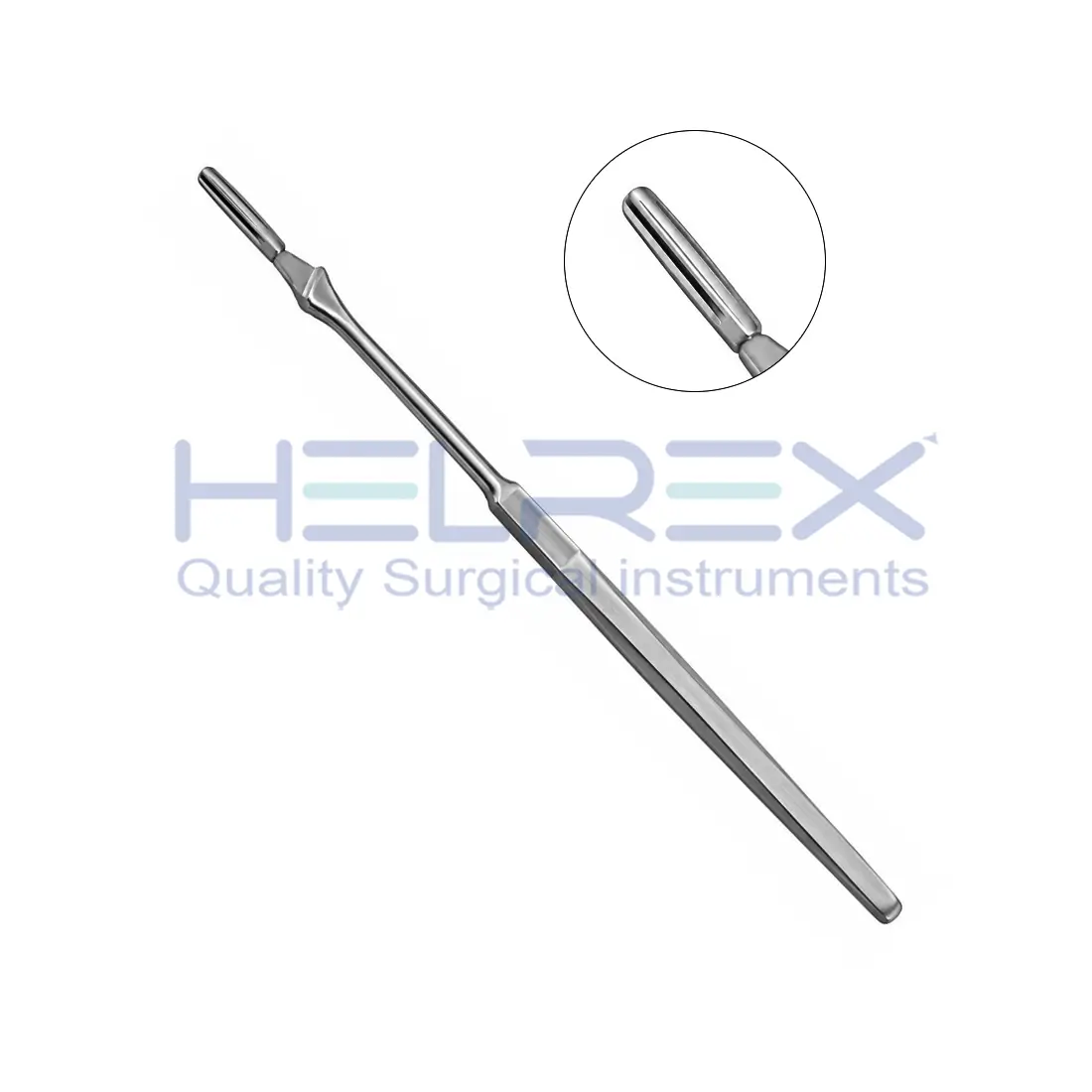
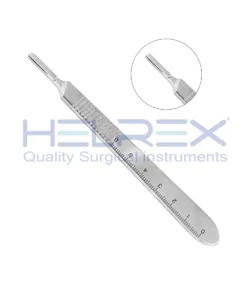
Scalpel Handle Knife #7, Holds Blades 10, 11, 12, 15, 18
Original price was: $49.00.$36.00Current price is: $36.00.
- Stainless steel withstands repeated sterilization without corrosion.
- Finely textured grip prevents slippage with wet gloves.
- Fully Reusable, Autoclavable / Sterilizable.
- Premium quality materials and craftsmanship.
Introduction of Scalpel Handle Knife #7, Holds Blades 10 to 18
Most clinicians remember the blade, yet the scalpel handle quietly decides every outcome. Ask any experienced physician what fails first. Sharpness rarely tops the list. Drift under pressure does, and no blade can correct it. That reality shapes every surgical handle leaving our manufacturing floor.
Early handles were forged individually and tarnished after a few boiling cycles. Our high-grade stainless steel stock changes that equation entirely. It withstands repeated sterilization without pitting, holding genuine corrosion resistance for years. Each unit receives a clean professional finish, because durability means little if residue hides inside the knurling.
Operating theatres are only one destination. Veterinary clinics, dental practices, and teaching benches built around laboratory use each demand a different feel. We build for all of them, treating the handle as an essential instrument rather than an accessory. Medical teams notice that difference within their first procedure.
Uses of Scalpel Handle #7
Most buyers assume the blade defines the procedure, yet surgeons we supply choose the handle first. A smaller handle like Handle #7 suits delicate work in plastic, ophthalmic, and hand surgery. It seats #11, #12, and #15 blades, producing tiny precise cuts where millimeters matter.
Our workshop traces modern use back to detachable-blade designs introduced in the early twentieth century. Today, a #3 handle fitted with #10 blades manages long skin cutting in general surgery. Larger handles carrying heavier blades serve orthopedic and autopsy teams, where control outweighs finesse during deep, steady incisions.
Beyond operating rooms, our handles travel into anatomy labs, veterinary clinics, and pathology departments. Students dissecting tissue need accurate incisions that expose structures without shredding them. Microsurgeons performing delicate procedures judge precision by one question: does the handle disappear from their awareness mid-cut?
Our ergonomically designed handle answers a problem surgeons rarely voice: hand fatigue during extended use. A finely textured grip surface helps reduce slippage through wet gloves, keeping a secure grip. Balanced weight distribution steadies the slender profile, and a comfortable grip offers flexibility across pencil and palm holds.
| Weight | 0.14 kg |
|---|
Be the first to review “Scalpel Handle Knife #7, Holds Blades 10, 11, 12, 15, 18”
- Helrex surgical instruments is a highly specialized process that requires attention to detail to ensure safety, sterility, and compliance with medical regulations. Each instrument should be carefully inspected for damage, wear, and proper functioning. Any defective items are discarded or repaired. Our instruments must be packed in poly bags packaging sterile packaging or according to Customers demand (Leather Case, Blister card, Display box etc.) Delivery time:- 6 working days via DHL/ FEDEX/ UPS/ TNT, 12working days via EMS. We must be shipped ASAP after payment is received in 5 working days or according to agreement.
Related products
Knives

Reviews
There are no reviews yet.