


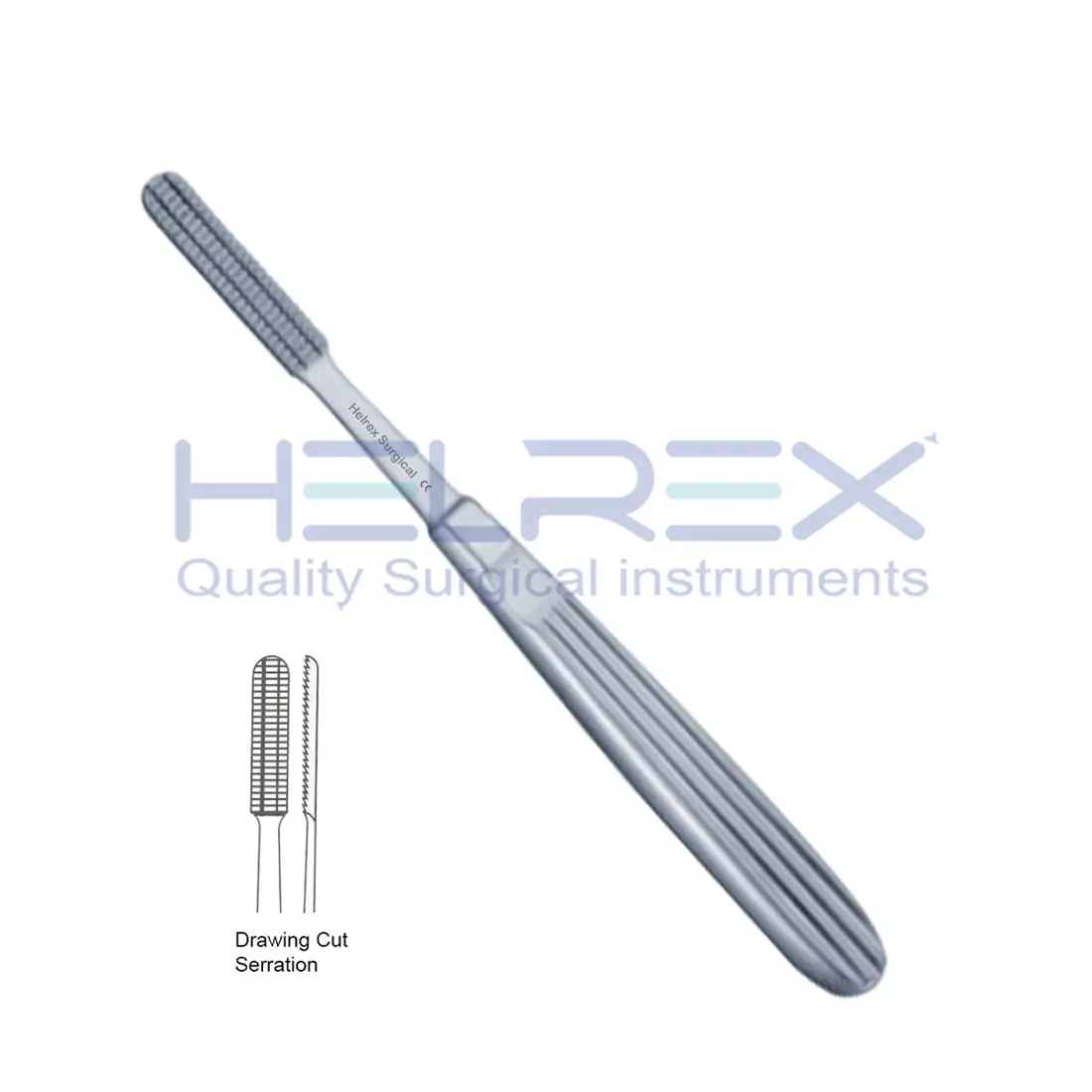
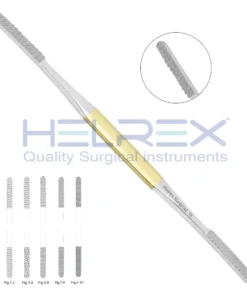
Maltz nasal rasp 17.5 cm – Tungsten Carbide
Original price was: $87.00.$58.00Current price is: $58.00.
- Tungsten carbide inlays deliver exceptional cutting durability.
- Weighted ergonomic handle reduces surgeon hand fatigue.
- Fully Reusable, Autoclavable / Sterilizable.
- Premium quality materials and craftsmanship.
- Lifetime Warranty.
Introduction of Maltz nasal rasp
Maltz Nasal Rasps occupy a quiet but essential place in plastic surgery, where surgeons rely on them to reshape the nose. Guided across the nasal dorsum, these rasps let doctors reduce a prominent nasal bony hump with steady, controlled strokes. Construction sets this device apart from ordinary alternatives. Tungsten carbide inlays deliver increased durability, holding their bite through countless procedures. A thoughtfully weighted handle improves grip and control, giving reduced hand fatigue so precision never slips during demanding, delicate reshaping work.
Across nasal contouring procedures, this instrument answers versatile surgical needs with quiet ease. Whether smoothing bones or achieving precise bone contouring, it helps refine subtle irregularities. Every measured stroke against the bones works toward a natural outcome and faster patient recovery.
Specialized Uses of Maltz rasp
Surgeons rely on this bone file to treat nose fractures and reshape damaged bone after trauma. During bone surgeries, it lets the surgeon approach the nasal tip with control, filing away irregularities and cutting off rough patches that complicate healing. Beyond fractures, it helps repair disease damage and remove infections lodged in the deep parts of the nose. Careful movements let it slide on bones through narrow spaces, reaching surrounding structures without disturbing nearby soft tissue structures, which matters greatly across long surgeries.
Guided in a forward direction, the instrument smooths uneven bone to reduce the risk of splinters that trigger pain. Clinicians managing nasal diseases value predictable results, since steady filing keeps recovery cleaner and lets patients regain comfortable breathing far sooner than expected.
Offered in diverse shapes and lengths 16.5cm, 17 cm, 17.5 cm, 7″ (17.8 cm), and 7 ¼” (18.4cm) overall length — files carry a firm handle design limiting finger strain. The long blade shows a flat profile with a 7.5mm Wide Tip or 7.2mm wide blade, sharp fine teeth, coarse horizontal serrations, and combination teeth. Pick reverse-cut models, forward-cut, drawing cut blades, or pushing cut bone files that cut backwards at optimal levels, giving fine cutting capability across angles, round edges, and blades — a lifetime tool you customize despite its bulky frame.
| Weight | 0.14 kg |
|---|
Be the first to review “Maltz nasal rasp 17.5 cm – Tungsten Carbide”
- Helrex surgical instruments is a highly specialized process that requires attention to detail to ensure safety, sterility, and compliance with medical regulations. Each instrument should be carefully inspected for damage, wear, and proper functioning. Any defective items are discarded or repaired. Our instruments must be packed in poly bags packaging sterile packaging or according to Customers demand (Leather Case, Blister card, Display box etc.) Delivery time:- 6 working days via DHL/ FEDEX/ UPS/ TNT, 12working days via EMS. We must be shipped ASAP after payment is received in 5 working days or according to agreement.
Related products


Nasal Rasps
Nasal Rasps

Nasal Rasps
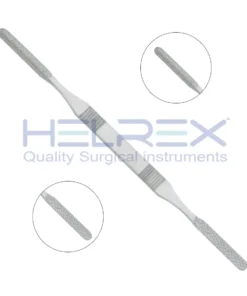
Nasal Rasps

Reviews
There are no reviews yet.