


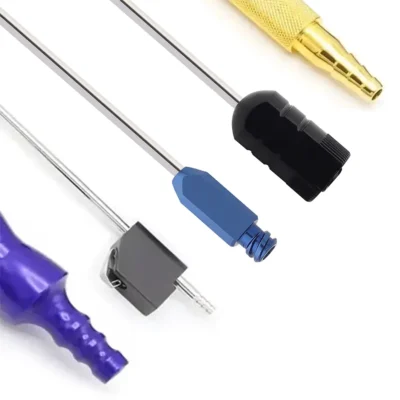


Emory Endoplastic Breast Dissector 13″ (33cm)
Original price was: $87.00.$65.00Current price is: $65.00.
- Fully Reusable, Autoclavable / Sterilizable.
- Premium quality materials and craftsmanship.
- Lifetime Warranty.
Introduction of Emory Endoplastic Breast Dissector 13″ (33cm)
Surgeons reaching for reliable depth trust the Emory Breast Dissector, a device built in the Tebbetts style and measuring a full 13″. This dissector, also catalogued as the Emory Endoplastic Breast Dissector, answers a precise surgical need during demanding breast augmentation work.
Crafted from German Stainless Steel, the material delivers the Premium Quality that repeated sterilization cycles demand. Its 33cm span places it among Extra-long sizes, giving this surgical tool the overall length required where shorter alternatives simply cannot reach the deeper planes comfortably.
Recognised also as the Emory Endo plastic Breast Dissector, this instrument earns its reputation through real surgical advantages rather than clever wording. Its generous Length and steady handling let surgeons move through breast augmentation procedures with the composure that experience quietly rewards.
Specifications
Spanning a working length of 33 cm, this dissector delivers extended reach into deeper tissue planes. A blunt tip minimizes inadvertent perforation during separation. Meanwhile, the highly polished smooth surface discourages tissue adherence and glides cleanly along the developing planes.
The instrument features a Bilateral design, presenting two functional working ends on a single shaft. This bilateral configuration offers dual working faces, letting surgeons reverse the tool instantly. Fabricated from surgical-grade German stainless steel, it resists corrosion across countless sterilization cycles.
Lightweight yet rigid, the shaft balances tactile feedback with structural stability throughout demanding cases. An ergonomic, non-slip handle grip supports precise control during prolonged use. Every unit is fully autoclavable, latex-free, and compliant with international manufacturing standards for reusable operative instrumentation.
Engineered for breast augmentation and reconstruction procedures. It accommodates three augmentation approaches the subpectoral space (subpectorial space), submammary pocket, and transaxillary approach. Its blunt lateral dissection capability eases initial dissection beneath overlying muscle and overlaying muscle, limiting trauma and hemorrhage while preserving sensory nerves the sensory nerves to the breast.
| Weight | 0.14 kg |
|---|
Be the first to review “Emory Endoplastic Breast Dissector 13″ (33cm)”
- Helrex surgical instruments is a highly specialized process that requires attention to detail to ensure safety, sterility, and compliance with medical regulations. Each instrument should be carefully inspected for damage, wear, and proper functioning. Any defective items are discarded or repaired. Our instruments must be packed in poly bags packaging sterile packaging or according to Customers demand (Leather Case, Blister card, Display box etc.) Delivery time:- 6 working days via DHL/ FEDEX/ UPS/ TNT, 12working days via EMS. We must be shipped ASAP after payment is received in 5 working days or according to agreement.
Tags: Plastic Surgery Dissectors
Latest Insights
Stay updated with the latest trends and guides related to this product.
View All Blogs
What to Check Before Ordering Surgical Instruments Online
A clear instrument order starts with a detailed product list. Whether you are…

Exploring the Surgical Scissors Collection at Helrex
Surgical scissors can look similar in photographs while differing in their listed specifications.…

Liposuction Cannulas: Building a Clear Catalogue Enquiry
A well-prepared cannula enquiry helps a supplier understand exactly which catalogue item you…
Related products

Dissectors

Dissectors

Dissectors


Dissectors


Reviews
There are no reviews yet.