

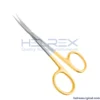
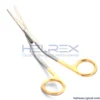
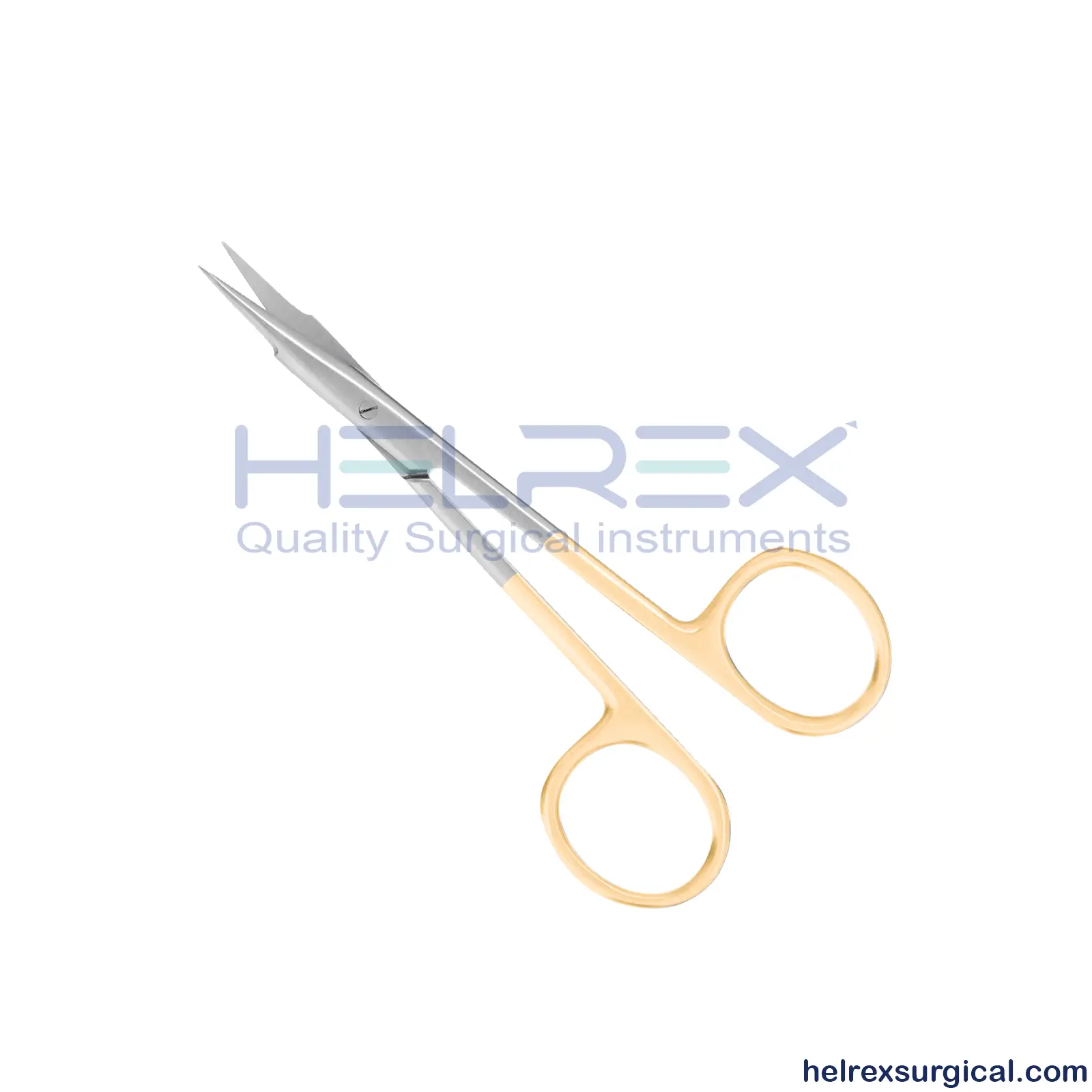
Goldman Fox Serrated Hard-Line Scissors 5″ (12.5cm) Tungsten Carbide
Original price was: $35.00.$18.00Current price is: $18.00.
- Serrated blades with fine tip
- Fully Reusable / Autoclavable
- Lifetime Warranty
- Highly QC Passed
- Shipping Worldwide
Description of Goldman Fox Serrated Hard-Line Scissors 5″
Among instruments built for precise dissection, Goldman Fox Serrated Scissors hold a quiet authority that practitioners recognize immediately. Their reputation rests on handling delicate tissue without slippage. When the tip must engage gingival tissue during periodontal work demanding millimeter accuracy from start to finish.
What sets these apart involves the serrated cutting surfaces, specifically designed to grip rather than push tough tissue aside. The micro-teeth along each edge anchor material firmly letting the scissor provide exactly the controlled bite needed for trimming barriers. Granulation tissue, and underside of flaps.
Across body procedures like breast augmentation, mastopexy, mastectomy, and abdominoplasty, surgeons rely on this design where skin layers vary in density. The same dependability extends through facial procedures facelift, blepharoplasty, rhinoplasty where trimming skin and cutting suture demand instruments incapable of crushing fragile structures underneath.
The SuperCut version intensifies what the standard model delivers, pairing serration with a knife edge that produces noticeably cleaner cuts. This forward cutting action translates well when trimming tissue, cutting sutures, and navigating dental contouring tasks—the kind of routine common uses clinicians repeat across thousands of cases.
Features And Uses
The defining feature that elevates these instruments lies in the micro-serrations machined along the lower blade. An engineering choice that gives clinicians control where standard smooth-bladed scissors fall short. Surgeons reach for them when slippery tissue resists clean separation, particularly during fine dissection around mobile anatomical planes.
Constructed from surgical-grade stainless steel with Tungsten Carbide reinforcement on premium variants, these precision surgical scissors are typically sized at 12.5–13 cm (roughly 5″ in length). The tapered blades narrow toward fine tips, an architecture that proves Ideal for working within constrained surgical corridors where bulkier instrumentation simply cannot reach.
Common applications span cutting suture material, trimming skin edges, and executing precise dissection through delicate tissue layers. Whether the operator selects straight or curved geometry depends entirely on approach angle, with the leading edge consistently delivering controlled bites through fibrous structures without unnecessary trauma to surrounding planes.
What practitioners genuinely value is the superior grip dynamic. The serrated jaw paired against its counterpart actively engages tissue rather than gliding across it, a meaningful contrast compared to conventional designs. This anti-slip behavior is designed to prevent the frustrating displacement that plagues clinicians during demanding microsurgical work.
Conclusion
These scissors are made available in both Serrated and smooth version formats, engineered for procedures spanning facial reconstruction and general body work. The tapered blades narrow toward fine tips, while the cutting action glides cleanly around fibrous surfaces, executing controlled cuts through tissue flaps without compromising surrounding planes during delicate operative steps.
Surgeons rely on them for dissection across multiple anatomical barriers, suture removal, trimming sutures flush against skin, and refining granulation beds. The micro-serrated blade edge resists tissue slippage, giving the grip advantage standard blades lack. The tips maintain consistent contact, ensuring the instrument bites rather than glides during precise tissue manipulation work.
| Manufacturer | HelrexSurgical® |
|---|---|
| Grade Material | German Stainless Steel and craftsmanship |
| Type | Hard-Line Serrated Tungsten Carbide Scissors |
| Logo / Packaging | Customized Available |
| Warranty | Lifetime |
| Certification | CE, ISO, FDA |
| Usage | Reusable / autoclavable |
| Weight | 0.14 kg |
|---|---|
| Shape | Curved, Straight |
Be the first to review “Goldman Fox Serrated Hard-Line Scissors 5″ (12.5cm) Tungsten Carbide”
- Helrex surgical instruments is a highly specialized process that requires attention to detail to ensure safety, sterility, and compliance with medical regulations. Each instrument should be carefully inspected for damage, wear, and proper functioning. Any defective items are discarded or repaired. Our instruments must be packed in poly bags packaging sterile packaging or according to Customers demand (Leather Case, Blister card, Display box etc.) Delivery time:- 6 working days via DHL/ FEDEX/ UPS/ TNT, 12working days via EMS. We must be shipped ASAP after payment is received in 5 working days or according to agreement.
Related products
Hard-Line (TC) Scissors
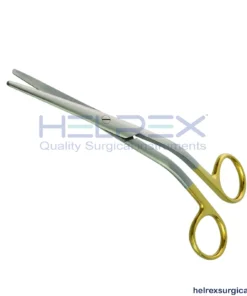
Gorney-Freeman Facelift Hard-Line Serrated Tungsten Carbide Scissors 19cm
Hard-Line (TC) Scissors
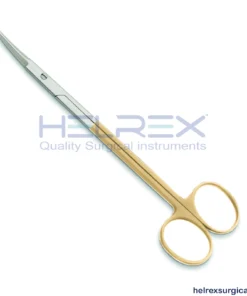
Cottle Hard-Line Tungsten Carbide Scissors, 6-1/4″ (16cm), Angled
Hard-Line (TC) Scissors
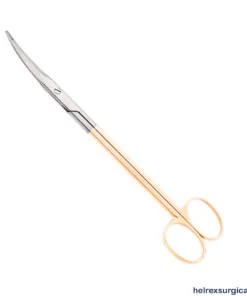
Kaye Facelift Hard-Line Serrated Tungsten Carbide Scissors 7″ (18cm), Curved
Hard-Line (TC) Scissors
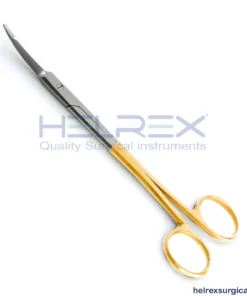
Gorney Facelift Hard-Line Tungsten Carbide Serrated Scissors, 7-1/2″ (19cm) Angled
Hard-Line (TC) Scissors
Kaye-Freeman Hard-Line Serrated Tungsten Carbide Scissors 7″ (18cm)
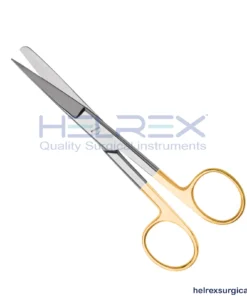
Hard-Line (TC) Scissors
Operating Scissors Hard-Line Serrated Tungsten Carbide (TC) 5-1/2″ (14cm)
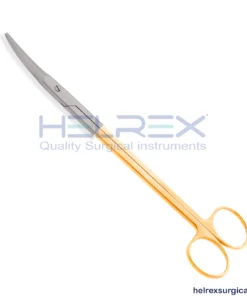
Hard-Line (TC) Scissors
Tessier Facelift Hard-Line Tungsten Carbide Scissors, 6-1/2″ (16.5cm), Curved
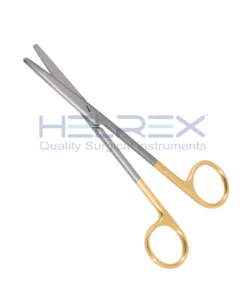
Hard-Line (TC) Scissors

Reviews
There are no reviews yet.